
A snack can help when lunch is late, dinner is still hours away, or you simply want something to eat between meals. It does not need to be a specially marketed product or a miniature nutrition project. A useful snack fits your appetite, tastes good, and is available when you need it.
Let the situation shape the snack
Consider when and where you usually want food. A long commute calls for something portable, while an afternoon at home offers more choices. If you regularly become hungry during a meeting-heavy afternoon, put a snack somewhere accessible before the day begins. Planning is useful when it solves a predictable gap rather than creating another rule.
There is no universal requirement to snack a fixed number of times. Some people prefer larger meals; others feel better with additional eating opportunities. Medication schedules, medical conditions, or other individual needs may affect timing. Follow personalized guidance when relevant, and avoid using a general article to override a plan developed for your health.
Pair foods when you want something more substantial
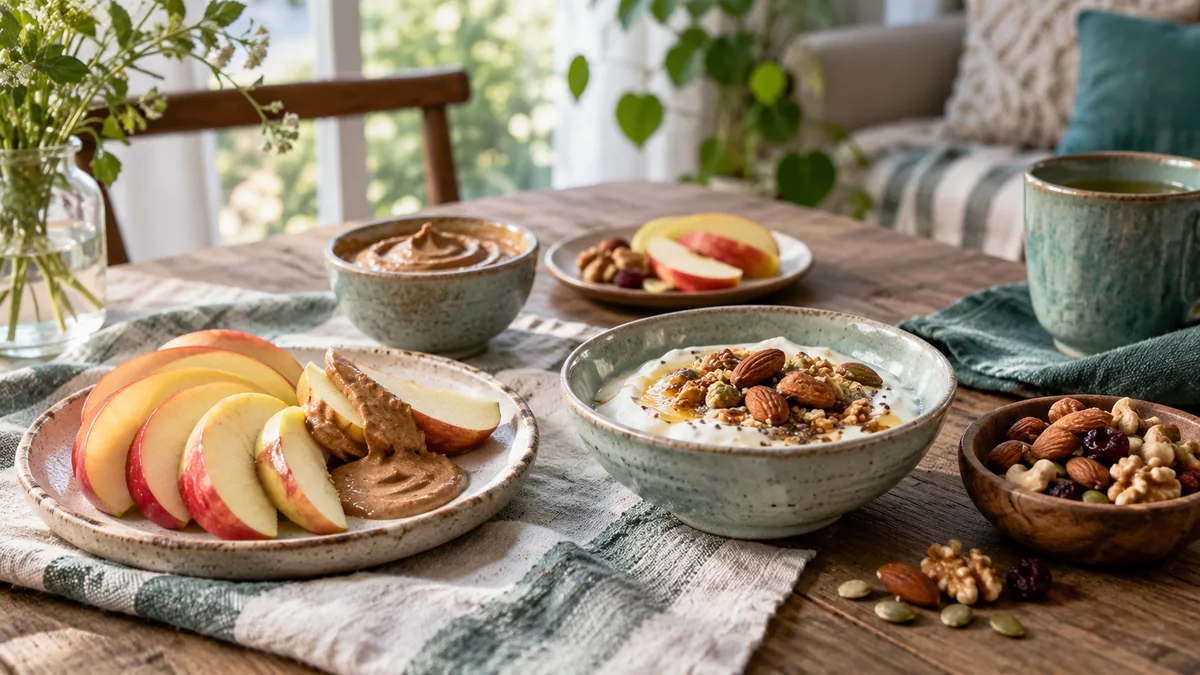
Combining two foods can add variety and make a snack more substantial. Try fruit with yogurt, crackers with hummus, toast with a suitable nut or seed butter, or vegetables with cheese and bread. This is an option, not a rule. Sometimes a piece of fruit or another single food is exactly what you want.
Think about how long it will be until your next meal. If dinner is soon, a smaller snack may suit you. If you have several hours and an active afternoon ahead, choose more food. Our balanced plate guide offers a similar flexible approach to meals without assigning one portion size to everyone.
Options that need little preparation
A banana with peanut butter on toast is easy to assemble at home. An apple with cheese offers another combination. Yogurt with oats or cereal can work when you want something spoonable, while hummus with bread and cucumber provides a savory option. Choose ingredients you enjoy rather than buying a snack because its packaging looks virtuous.
For a warmer snack, try a small bowl of leftover soup, a piece of toast with beans, or oatmeal made according to the package. Snacks do not have to be cold, sweet, or finger foods. A familiar meal ingredient may be more satisfying and less expensive than a dedicated snack product.
Shelf-stable choices for a bag or desk
Whole fruit that tolerates travel, nuts or seeds when appropriate, whole-grain crackers, and unopened shelf-stable foods can be convenient. Read package storage directions because some products need refrigeration after opening. Keep allergy needs and workplace rules in mind. A nut-free alternative should be checked for ingredients and cross-contact information rather than assumed safe.
Make a small desk supply that you rotate regularly. Choose foods you actually want to eat, check dates, and store them away from excessive heat. If a snack repeatedly remains untouched, replace it with a more appealing option. The goal is useful access to food, not a drawer full of emergency items you dislike.
Chilled snacks need a cold plan
Yogurt, cut produce, many cheeses, cooked eggs, and other perishable foods require appropriate storage. When packing them away from a refrigerator, use an insulated bag with cold sources. USDA recommends at least two cold sources for packed perishable lunches; the same practical approach helps with perishable snacks carried for several hours.
Do not leave food in a warm car and assume it is safe because the container remains closed. Follow time and temperature guidance, and discard perishables that have been held unsafely. If reliable cooling is unavailable, select genuinely shelf-stable options instead. Our lunch guide covers additional ideas for taking food through a busy day.
Read snack labels with a purpose
Compare products according to what matters to you: allergens, fiber, protein, sodium, or added sugars. Use comparable serving sizes and remember that the label’s serving size is not a rule about how much you should eat. A bar can be convenient, but words such as natural or clean do not explain its nutritional role.
Some packaged snacks are mainly enjoyable treats, and enjoyment is a legitimate reason to eat. You do not need to redesign every food into a more nutritious version. Our processed foods guide explains why a food’s package or ingredient count cannot tell the whole story about how it fits into an eating pattern.
Make snacks part of an adequate day of eating
If you feel constantly hungry despite frequent snacks, look at whether meals are substantial enough and whether your schedule allows you to eat regularly. Replacing lunch with a sequence of tiny snacks may leave you unsatisfied. On the other hand, several smaller eating occasions may fit some people well when they include enough overall food.
Choose two dependable snacks for the coming week: one you can keep at home and one suitable for travel. Add their ingredients to your meal plan and adjust after trying them. A practical snack routine should reduce last-minute decisions and support your day, while leaving room for changing appetite and preferences.
Frequently Asked Questions
There is no general requirement to do so. Individual health needs, medication instructions, or difficulties recognizing hunger may call for a more structured plan.
No. Homemade and purchased foods can both be useful. Consider taste, adequacy, convenience, cost, and safe storage rather than assuming preparation location determines quality.
Yes, an assembled collection of foods can form a meal when it provides enough to eat. Add substantial components according to your appetite and needs.