
Lunch is often the meal squeezed between everything else. A useful lunch plan gives you enough food and enough variety without requiring a full cooking session in the middle of the day. Start with a few formats you can repeat using different ingredients, then keep the components for one or two of them available.
Choose a format before choosing a recipe
Think in terms of a bowl, sandwich, soup, wrap, or assembled plate. Each format can use several combinations of vegetables, protein foods, and grains or other starches. This makes lunch less dependent on one exact ingredient being available. Our balanced plate guide explains how the same idea works for mixed dishes.
Consider where you will eat and what equipment you have. A lunch that needs a stove may suit a day off but not a short work break. If you have only a microwave, choose foods that reheat well. If you have no refrigerator, you need a reliable insulated bag and cold sources for perishable ingredients.
A grain bowl with a clear flavor direction
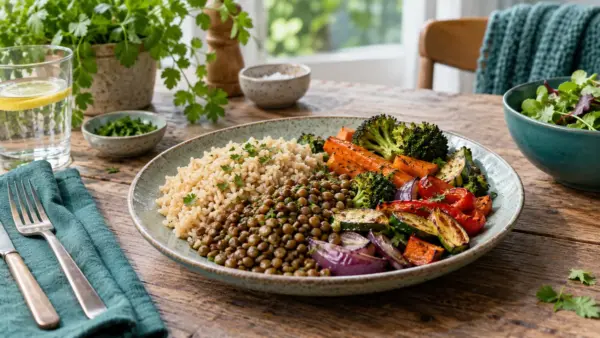
Start with safely stored cooked rice, barley, quinoa, or another grain. Add beans, tofu, chicken, or another suitable protein, then cooked or raw vegetables. Choose a sauce that brings the components together. A lemon-herb dressing gives a different result from a peanut-style sauce or salsa, even when the base ingredients are similar.
For an easy combination, use rice, black beans, roasted peppers, corn, and salsa. Another option is barley with chickpeas, cucumber, tomato, and herbs. Keep crisp ingredients and dressing separate until eating if texture matters to you. Use the amount of food that makes the meal satisfying rather than copying a tiny picture-perfect bowl.
A sandwich that feels like a meal
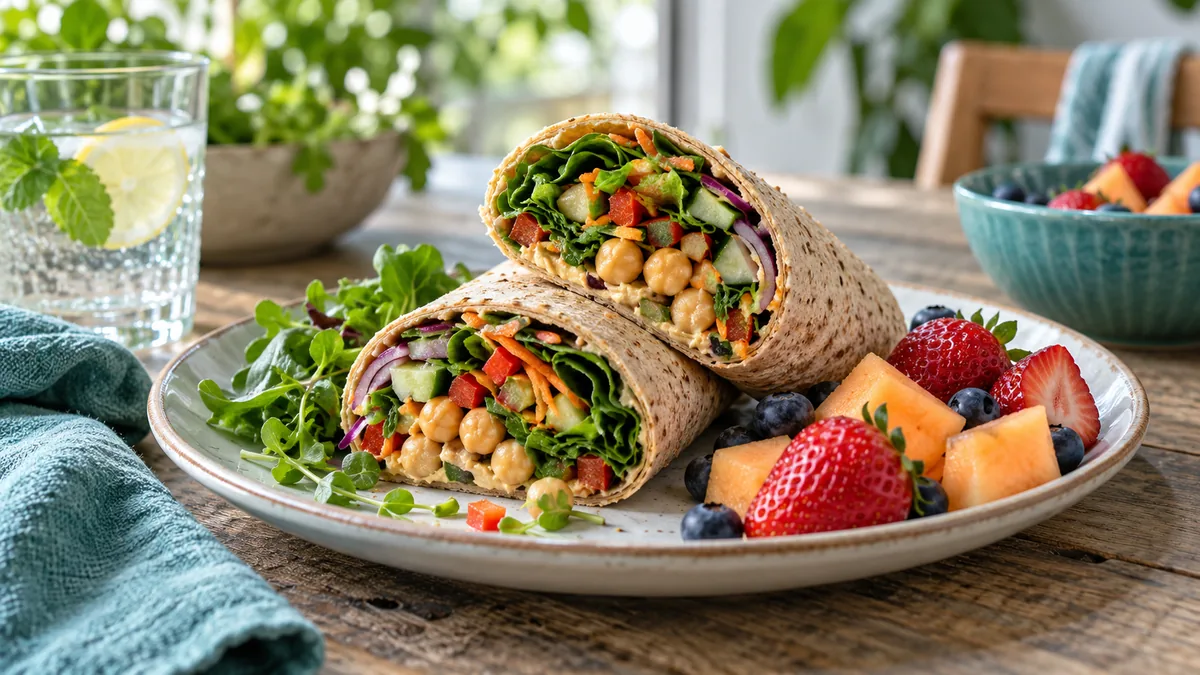
Choose bread or a roll you enjoy and add a substantial filling. Hummus with vegetables, egg salad, leftover roast chicken, tofu, or mashed beans are possibilities. Include fruit, soup, or another side according to your appetite. A sandwich does not become inadequate simply because it is quick or familiar.
For a mashed-bean filling, combine cooked white beans with lemon, olive oil, herbs, and chopped vegetables. Keep the mixture refrigerated. For a warmer option, toast bread and add cooked mushrooms, egg, or melted cheese with tomato. Our everyday food guide offers pantry staples that make these combinations easier to assemble.
Soup with useful additions
A soup containing lentils, beans, meat, tofu, potatoes, or grains may provide a more substantial lunch than a light vegetable broth alone. Add bread, crackers, fruit, or yogurt if you want more alongside it. Purchased soup can be a practical base; compare labels when sodium or other nutrients matter to your needs.
To expand a simple soup, stir in canned beans and frozen vegetables while heating, following appropriate cooking instructions. Avoid treating every convenience food as a complete meal or as something you must avoid. Look at what is already present and add what makes the lunch more satisfying and useful to you.
A potato with a flexible filling
Cook a potato or sweet potato until tender using a method suited to your equipment. Split it and add beans, leftover chili, cottage cheese, tuna, or another preferred filling. Serve vegetables alongside or mix them into the topping. This format can use small amounts of leftovers that might not otherwise form a complete meal.
Keep preparation straightforward. A potato, canned beans, frozen broccoli, and a favorite sauce can be enough. If lunch regularly becomes too complicated, return to combinations with fewer active steps. Our meal planning guide can help you reserve one prepared component specifically for the next day’s lunch.
A no-cook plate for the busiest days
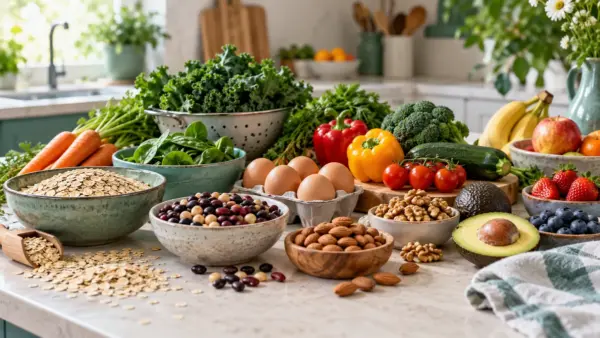
Combine bread or crackers, hummus or another suitable protein food, fruit, and vegetables that need little preparation. Add cheese, nuts, or seeds if desired and appropriate. This is an assembled meal, not a failure to cook. It can also work well when people sharing lunch prefer different textures and flavors.
Keep a few components separate in the refrigerator so they can be combined quickly. Washed produce, a spread, and bread are often more useful than a complicated preassembled meal. Follow the storage instructions for each ingredient, and avoid assuming that food is safe simply because it will be eaten cold.
Treat leftovers as planned ingredients
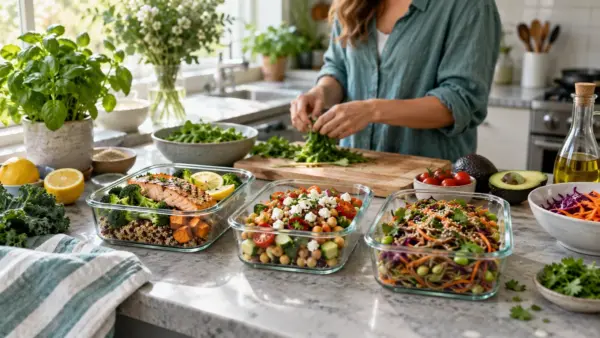
Set aside a lunch portion when serving dinner, then refrigerate it promptly in a shallow container. USDA recommends using refrigerated leftovers within three to four days and reheating them to 165°F. Freeze portions that will not be eaten within that period. Labeling the container removes uncertainty when several similar meals are stored together.
Choose one lunch format to try this week and list its essential ingredients. If breakfast is also rushed, our quick breakfast ideas can help you share ingredients across meals. The goal is a lunch you can prepare, enjoy, and repeat without giving it more time than your day can reasonably provide.
Frequently Asked Questions
Yes, when the food has been stored safely and the combination provides enough to eat. Add a side or another component if the portion feels incomplete.
Choose suitable cold meals and keep perishables properly chilled. Sandwiches, bean salads, and assembled plates can work without reheating.
Repeat a format while changing one component, such as the sauce, vegetable, or protein. You do not need a completely new recipe every day.