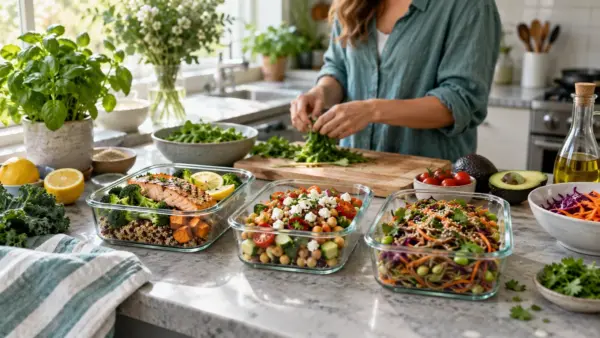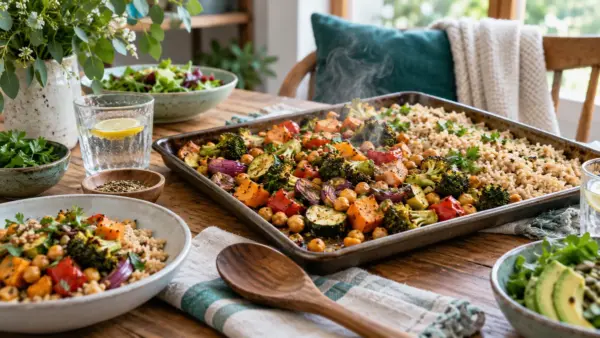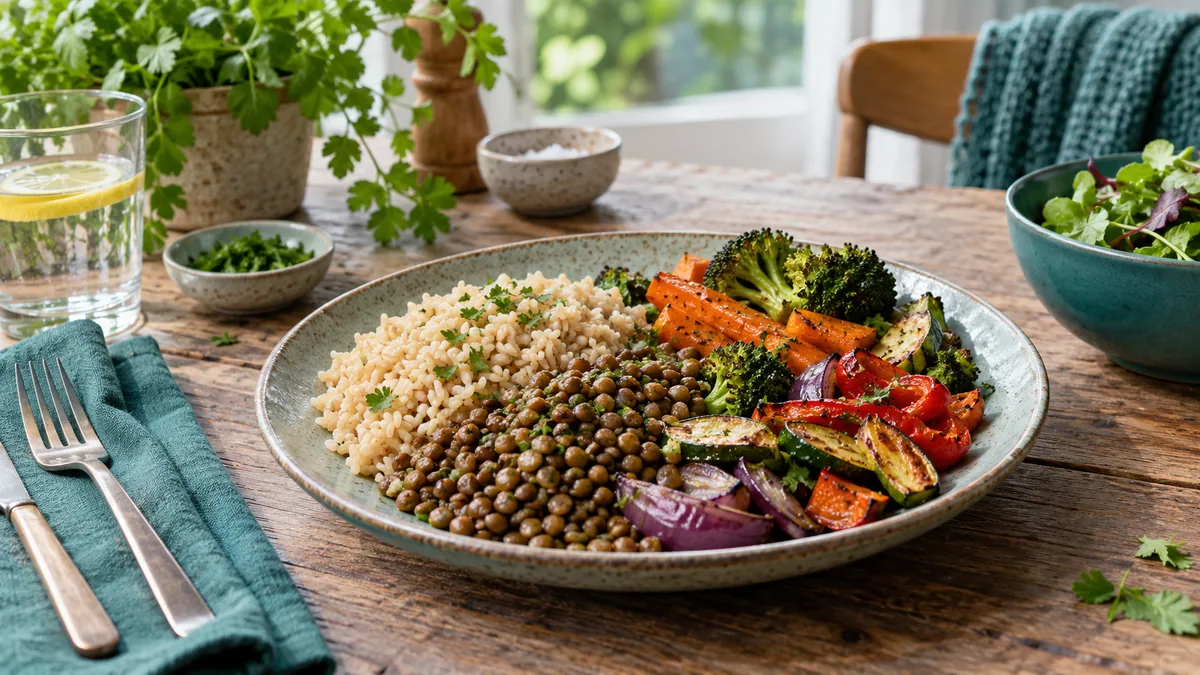

A balanced plate can make meal decisions easier by giving you a few useful components to look for. It is not a requirement to divide every dish into exact sections. Real meals include soups, sandwiches, curries, casseroles, and shared platters. The aim is to bring together foods that provide nourishment and satisfaction in a way that fits how you eat.
Start with components you recognize
Think about a meal’s vegetables or fruit, protein source, and grain or other starchy food. Add fats, sauces, herbs, or seasonings that make it enjoyable. Dairy or a suitable alternative may appear in the meal or elsewhere in the day. You do not need to force every component into one bowl to make the pattern useful.
For example, a plate of rice, lentils, and cooked vegetables already combines several components. A chicken sandwich with tomato and a side of fruit does too. A bowl of noodles can include tofu and vegetables. Begin by recognizing what is present before deciding what to add; familiar meals often need less restructuring than diet messaging suggests.
Use visual guidance flexibly
MyPlate offers a simple visual reminder to include different food groups and give fruits and vegetables a meaningful place. Treat that as a starting point rather than a measurement exercise. Your appetite, activity, access to food, and individual needs affect what an adequate meal looks like. A diagram cannot determine everyone’s portion sizes.
If vegetables currently appear rarely in your meals, add one you enjoy to a familiar dish. If a salad leaves you hungry, include a substantial protein source, grain or starchy food, and dressing. Balance involves having enough to eat, not merely filling a plate with low-energy ingredients. Our healthy eating guide looks at the wider pattern.
Give protein a practical role
Protein foods include beans, lentils, tofu, eggs, fish, meat, poultry, nuts, and seeds, among other options. Choose according to your preferences, budget, and dietary needs. You do not need to include animal foods at every meal. A lentil soup or bean burrito can provide a useful protein component alongside other foods.
When using a small garnish, consider whether it provides the amount of food you want for the meal. A few chickpeas scattered over lettuce may not be as substantial as a generous bean filling or a bowl of lentil soup. This is a question of adequacy and satisfaction, not a demand to calculate grams at the table.
Keep grains and starches in the picture
Rice, bread, tortillas, oats, pasta, potatoes, and other starchy foods can form a dependable meal foundation. Whole-grain options add variety and often more fiber, but you do not have to eliminate familiar refined grains. You might mix brown and white rice or choose a whole-grain bread you actually enjoy.
The useful choice depends on the meal and the person. Someone with specific digestive or medical needs may need different options. For everyday planning, keep one or two easy bases available so you can assemble food without starting from scratch. Our guide to everyday nutritious foods suggests staples with several uses.
Make vegetables and fruit convenient
Use fresh, frozen, canned, or cooked produce according to what fits. Frozen peas can go into rice, canned tomatoes into a stew, and fruit alongside a sandwich. You do not need a separate raw salad at every meal. Different preparation methods may make a vegetable more appealing and easier to include regularly.
Choose a manageable starting amount and add variety over time. A meal does not fail because only one vegetable is available. Look across several meals and shopping trips. Our colorful produce guide explains how variety can be a useful prompt without turning eating into a daily rainbow checklist.
Apply the idea to mixed dishes and takeout
For a soup, ask whether it contains something substantial such as beans, lentils, meat, or tofu, plus vegetables and perhaps potatoes or grains. If it is mostly broth and vegetables, bread, yogurt, or another side may help complete the meal. For a sandwich, consider the filling and what you would enjoy alongside it.
With takeout, work with the choices available. Add vegetables or a bean side if that improves the meal for you, or save part of an order for later if you prefer. There is no need to compensate afterward or label the meal a lapse. Convenience and enjoyment can coexist with a varied eating pattern.
Check satisfaction, then adjust
After eating, notice whether the meal was enough, tasted good, and was practical to prepare. If you become hungry again quickly, the meal may need more food or a different combination. If preparation took too much effort, simplify it next time. These observations are more useful than judging how closely dinner resembled an illustration.
A registered dietitian can help when medical conditions, allergies, sensory needs, or food anxiety make general advice hard to apply. Otherwise, choose one meal this week and identify a helpful addition. A flexible approach becomes valuable through repeated use, not through making every plate look perfectly balanced.
Frequently Asked Questions
No. Look at the overall pattern across the day and week. A simple meal can fit well alongside other varied meals and snacks.
Not for this approach. Use appetite, practical meal components, and any individualized guidance you have rather than turning a general visual into a strict measuring system.
Yes. Soups, stews, rice dishes, and casseroles can combine several food groups. Consider their ingredients rather than whether foods occupy separate areas of a plate.