
Healthy eating is a pattern built across many meals, not a test passed by one perfect plate. It needs to provide nourishment, fit your resources, and include foods you enjoy. A useful approach starts with what you already eat, identifies an achievable improvement, and leaves room for convenience, culture, appetite, and the ordinary unpredictability of life.
Think in food groups rather than strict rules
Meals can draw from vegetables, fruits, grains and other starchy foods, protein foods, and dairy or suitable alternatives. Different foods contribute different nutrients, so variety is useful. This does not mean every meal must contain every group. Look across your day and week rather than trying to make each snack a complete nutrition project.
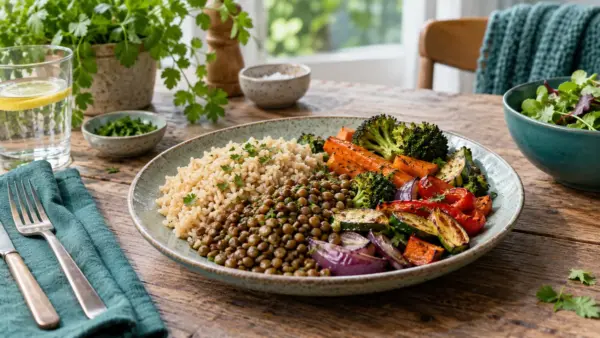
For example, breakfast might be oatmeal with milk and fruit, lunch a bean-filled wrap with vegetables, and dinner a rice dish with fish or tofu and greens. These are meal-building examples, not a mandatory menu. Our balanced plate guide offers a flexible framework that also works for soups, mixed dishes, and familiar cultural meals.
Begin with an addition you will actually use
Choose one practical change. Add frozen peas to a favorite pasta, include fruit alongside toast, or keep canned beans available for a quick lunch. Starting with an addition can feel more manageable than creating a long list of forbidden foods. It also gives you something concrete to buy, prepare, and evaluate.
Pay attention to whether the change suits your appetite and digestion. If you increase fiber-rich foods such as beans or whole grains, build gradually if needed and include fluids. A food that does not agree with you may need a different preparation, amount, or alternative. Persistent digestive problems deserve individualized advice rather than increasingly restrictive experiments.
Make ordinary ingredients work harder
A few versatile staples can support many meals. Oats can become breakfast, a savory bowl, or an ingredient in a homemade snack. Beans can go into soup, tacos, salads, or a spread. Eggs, tofu, canned fish, or lentils can help you vary protein choices according to your preferences and budget.
Fresh produce is one option, not the only useful one. Frozen vegetables and canned produce can make food available when shopping is difficult or time is short. Choose products that fit the meal and compare labels when helpful. The everyday nutritious foods guide explores familiar ingredients without presenting expensive specialty foods as necessities.
Use labels to answer a specific question
Rather than studying every number, decide what you want to compare. You might check fiber in two breads, sodium in two soups, or added sugars in two cereals. Look at the listed serving sizes so the comparison is meaningful. FDA explains that serving size reflects a commonly consumed amount; it is not a personal eating prescription.
Ingredient lists and nutrition panels serve different purposes. Ingredients tell you what is in the product, including allergens, while the nutrition panel shows amounts of listed nutrients. A short ingredient list does not automatically mean a food is better for you. Consider what the product contributes and how it fits into your overall meals.
Plan for your actual level of time and energy
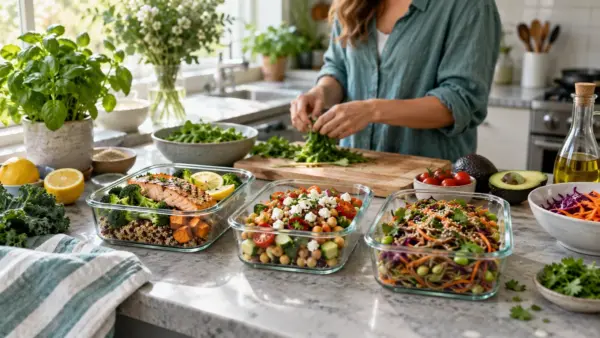
Keep at least one meal that takes little preparation: a sandwich with fruit, a microwaved potato with beans, or frozen vegetables added to a ready-to-heat grain and protein source. Convenience can make regular eating possible. You do not need to cook everything from scratch for your meals to be useful and nourishing.
If planning helps, choose a few dinners and leave flexible spaces for leftovers or changing schedules. Our meal planning guide shows how to reuse ingredients without eating the same dish every day. Include foods you already like so the plan does not depend on suddenly becoming a different kind of cook.
Make meals satisfying as well as practical
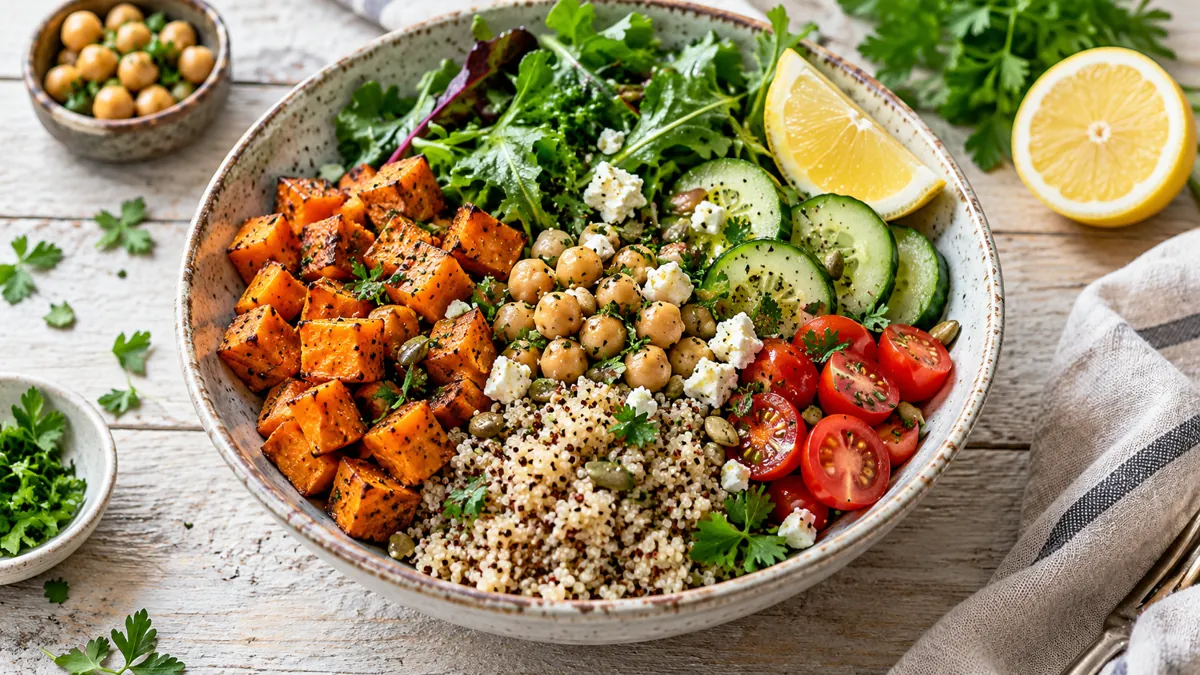
Flavor and texture matter. A squeeze of lemon, toasted seeds, herbs, a favorite sauce, or something crunchy can make simple ingredients more appealing. Include enough food to feel adequately fed, and adjust portions as your hunger, activity, and circumstances change. General examples cannot determine the right amount for every person.
Keep room for foods eaten for pleasure, celebration, or connection. A dessert or restaurant meal does not cancel the value of the rest of your eating pattern. Avoid labeling yourself good or bad based on a meal. If food decisions create persistent anxiety or guilt, support from a registered dietitian or other qualified professional may help.
Adapt the pattern to your needs
Allergies, medical conditions, pregnancy, age, religious practices, and vegetarian or vegan eating can affect food choices. For plant-based beverages, check protein and fortification because products differ. A clinician or registered dietitian can help when your needs require more detail than a general guide can provide.
Choose one change to practice this week and make it visible in your shopping list. Perhaps it is keeping a frozen vegetable you enjoy or planning two simple breakfasts. Review whether it made eating easier. A healthy pattern develops through useful, repeatable decisions, with enough flexibility to keep food a manageable and enjoyable part of the day.
Frequently Asked Questions
No. Many eating patterns can include varied, nourishing foods. Your preferences, access, health needs, and ability to sustain the pattern matter more than a label.
No. Packaging includes foods such as oats, canned beans, frozen vegetables, and yogurt. Evaluate the food and its role rather than the package alone.
Choose a manageable pace. One useful shopping or meal-building change can be easier to maintain than replacing your entire routine at once.