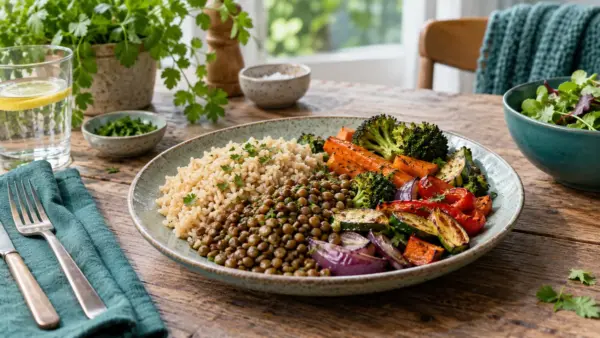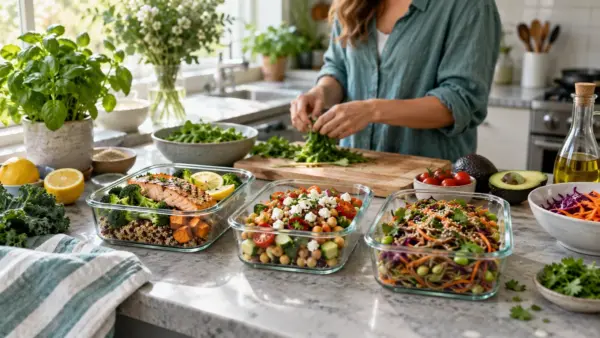

An eating routine is more likely to last when the food tastes good and the preparation fits your life. A plan that depends on constant restraint, expensive ingredients, or hours of cooking may be difficult to repeat. Sustainable healthy eating means building useful habits around your preferences and resources, while allowing those habits to change with your circumstances.
Begin with what already works
List a few meals you enjoy and can prepare comfortably. They may be family recipes, quick sandwiches, rice dishes, soups, or purchased meals. Look for one way to make those meals more useful: adding a vegetable, including a substantial protein food, or keeping a convenient ingredient available. Improvement does not require abandoning familiar food.
For example, a favorite pasta can include beans and frozen spinach. A sandwich can be served with fruit and yogurt. A rice dish can include lentils or tofu and a vegetable you like. Our balanced plate guide helps you think about additions without making every meal conform to an unfamiliar set of rules.
Treat flavor as part of the plan
Food that is technically nutritious but consistently unpleasant is unlikely to become a dependable habit. Use herbs, spices, sauces, dressings, and preferred cooking methods to make ingredients appealing. Try roasting, sautéing, steaming, or serving foods raw according to what you enjoy. You do not have to prefer the same preparation as someone else.
Notice texture as well as flavor. A crunchy topping may make a soft soup more satisfying, while a smooth spread may work better than whole beans in a sandwich. Keep experiments small so one unsuccessful recipe does not waste a large batch of food. A single new seasoning is often enough to change a familiar dish.
Make convenience an intentional tool
Frozen vegetables, canned beans, precut produce, ready-to-heat grains, and prepared sauces can reduce the work involved in eating regularly. Choose products that fit your needs and budget. Convenience is especially useful during illness, caregiving, busy work periods, or times when cooking facilities are limited. It does not require an apology.
Read labels to answer practical questions, such as whether a food contains an allergen or how two soups compare in sodium. Avoid using the number of ingredients as a moral score. Our guide to processed foods explains why processing and nutritional value are related in more complicated ways than a simple good-or-bad division.
Keep a short rotation, then vary the details
You might have three breakfasts, three lunches, and five dinners that cover most ordinary weeks. Change a fruit, sauce, vegetable, or protein source to create variety. This reduces the number of decisions without requiring identical meals. A dependable rotation also makes shopping easier because you learn which ingredients your household actually uses.
Leave room for spontaneous meals and social occasions. A plan can support your week without controlling every invitation or celebration. If a restaurant meal replaces your planned dinner, move or safely freeze the ingredients when appropriate. Our meal planning guide shows how to create flexible meal slots and backup options.
Include enough food and respond to appetite
An enjoyable eating pattern needs to be adequately nourishing. If a meal leaves you repeatedly hungry soon afterward, consider whether it needs more food or a different combination. A salad may need beans, bread, dressing, or another substantial component. A smoothie may work better with something to chew alongside it.
Appetite can vary with activity, illness, stress, age, and other circumstances. General meal examples cannot prescribe the right amount for everyone. If hunger cues are difficult to interpret, eating feels chaotic, or a medical condition affects intake, a registered dietitian can help you create a more individualized approach without relying on rigid internet rules.
Make room for foods eaten for pleasure
Celebration foods, desserts, favorite snacks, and cultural dishes can belong in an overall varied pattern. You do not need to earn them through exercise or compensate afterward. Calling a meal a cheat can make ordinary enjoyment feel like wrongdoing. More neutral language can help you focus on what a food contributes and why you choose it.
If food rules create persistent guilt, anxiety, or avoidance of social situations, seek qualified support. The goal is not to replace one strict system with a more fashionable strict system. A sustainable routine should make daily eating more manageable, while recognizing that some people need professional help to rebuild that relationship.
Review cost and effort together
The cheapest ingredient is not always the most useful if it requires equipment or time you do not have. Compare the full practical cost: preparation, storage, waste, and whether people will eat it. A small bag of frozen vegetables may serve your household better than a large fresh purchase that spoils before you use it.
Choose one experiment for the coming week. Try a new snack combination, prepare one helpful component, or make a familiar dinner with an extra vegetable. Keep it if it improves your routine; change it if it does not. Sustainable eating is built through these practical decisions, with taste and flexibility included from the beginning.
Frequently Asked Questions
No. Leftovers, assembled meals, convenience ingredients, and purchased foods can all contribute. Choose an approach that fits your energy, resources, and food-safety needs.
Use shared components with optional toppings or sides. A rice bowl, taco meal, or assembled plate lets people vary flavors without requiring entirely separate dinners.
Ask whether you enjoy it, can afford it, and can repeat it during an ordinary busy week. Adjust changes that depend on unusually high effort.