
You can begin exercising at home without turning a room into a gym. A clear patch of floor, a stable chair, and a wall give you several useful options. The challenge is choosing a small set of movements you can perform comfortably and arranging them into a session that feels easy to repeat.
Prepare the room first
Move loose rugs, bags, and pet toys away from your path. Use a chair without wheels and place it against a wall if needed. Check that your shoes or bare feet grip the surface comfortably. A countertop used for support should be fixed and sturdy; lightweight furniture is not a safe substitute.
Choose a time when you can pay attention to movement. If interruptions are likely, plan a short session that can pause easily. Keep water nearby and leave enough space to extend your arms without hitting anything. Our beginner routine guide can help you decide how often home sessions fit alongside the rest of your week.
Learn a few dependable movements
Chair stand
Sit on a sturdy chair with your feet placed where you can stand securely. Lean forward slightly, stand up, then lower yourself with control. Use your hands if needed. Begin with a few repetitions and stop before you start dropping into the chair. A higher seat or additional hand support may make the movement more manageable.
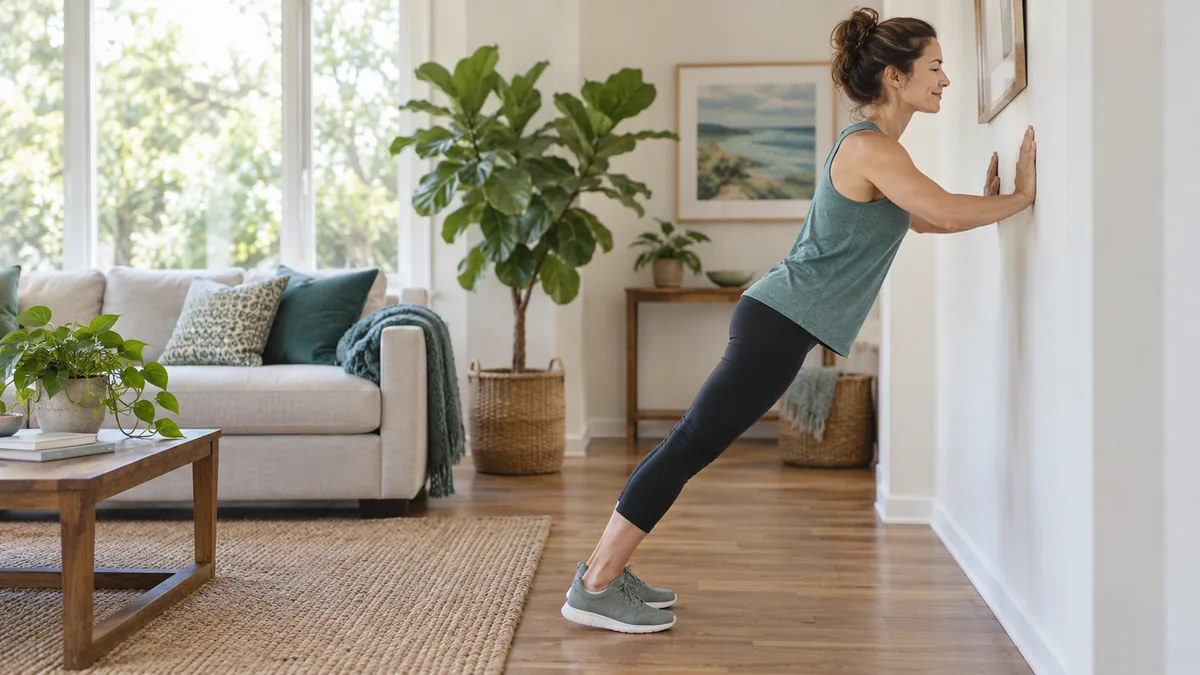
Wall push-up
Face a wall, place your palms around shoulder height, and step back a comfortable distance. Bend your elbows to bring your chest closer, then press away. Keep your body in a comfortable line and breathe throughout. Standing closer reduces the challenge. Avoid moving to a lower surface until the wall version feels controlled.
Supported heel raise
Hold a stable counter, lift your heels slowly, and lower them smoothly. Keep the movement small if needed. This exercise can be done with both hands supporting balance, so there is no need to wobble through it. If your feet or ankles hurt, choose another movement and seek advice about persistent symptoms.
Standing hip movement
With your hands on support, move one leg a short distance behind you without leaning your trunk far forward or arching your back. Return and switch sides. This is a controlled movement practice, not a high kick. Keep the range modest and focus on staying steady over the supporting leg.
Easy marching or side steps
March in place or step gently from side to side for a brief period. Keep your feet close to the ground and the area clear. A seated march is another option. These movements can add variety between strength exercises, but whether they count as moderate aerobic activity depends on how hard you are working.
Put together a short practice session
Begin with a few minutes of easy walking around the room and gentle joint movement. Then try one round of chair stands, wall push-ups, supported heel raises, and marching. For the strength movements, a small number of controlled repetitions is enough for an introductory session. Pause whenever you need to reset your breathing or position.
For example, perform five chair stands, five wall push-ups, six heel raises, and thirty seconds of marching. Rest between movements. Finish with a slower walk around the room. This is a sample starting sequence, not a complete prescription or a test you must pass. Adjust the counts according to your comfort and ability.
Make the next session slightly different
Once the sequence feels familiar, you can add a few repetitions, repeat a round, or make one movement a little more challenging. Choose one change at a time. If the final repetitions become rushed or awkward, reduce the difficulty. The beginner strength article explains how to use control and effort to guide progress.
A no-equipment routine has limits. It may be harder to train pulling movements and progressively challenge every major muscle group using only a wall and chair. Over time, a suitable resistance band, community facility, or guided class may expand your options. You can begin with what you have while recognizing what a fuller program needs.
Create options for different days
For a busy day, practice two movements and stop. For a day with more time, add an easy walk or another controlled round. If your legs are tired from yesterday’s unfamiliar session, use a gentler activity rather than repeating the hardest exercises. Include recovery time in your expectations from the start.
When you want aerobic variety, try walking through a hallway, dancing at a comfortable pace, or following an accessible low-impact class. Check that any video provides modifications and clear instructions. Add these choices to a balanced weekly plan so a single short circuit is not expected to cover every aspect of fitness.
Stop for sharp pain, faintness, chest discomfort, or unusual breathlessness. If health conditions or balance concerns affect exercise, ask for individualized adaptations. The home setting should make activity convenient; it does not remove the need to respond sensibly when a movement or symptom feels wrong.
Frequently Asked Questions
Yes, movements that challenge your muscles can build strength. The routine eventually needs enough resistance and variety to remain useful as your ability changes.
No. Standing and seated options can form an accessible starting routine. Choose movements that suit your mobility and available support.
Start with an amount you can manage, even if it is brief. Duration matters less than suitable effort, good control, and a plan you can repeat.