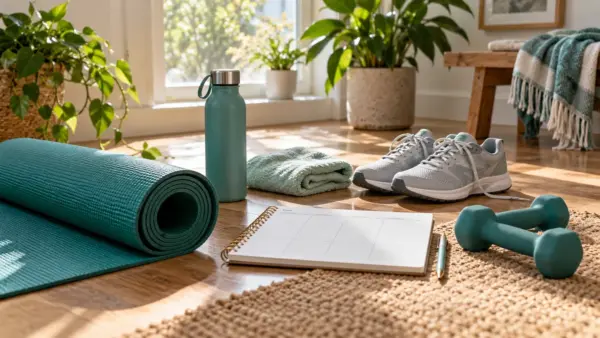

A lasting fitness routine starts with a useful question: what could you repeat during an ordinary, slightly inconvenient week? The answer might be a walk after lunch, two short home sessions, or a Saturday swim. It does not have to resemble someone else’s training schedule. Your first job is to make movement familiar enough that it belongs in your day.
Choose a reason you can recognize
Think about what you want exercise to help you do. Carrying groceries more comfortably, enjoying a neighborhood walk, or feeling less intimidated by a gym gives your routine a practical direction. Write that reason in one sentence. Avoid making your whole plan depend on a particular appearance or a deadline that encourages rushing.
Then describe your starting point honestly. If you currently do little planned activity, a manageable beginning might be ten minutes of walking on three days. Someone already walking regularly might add a basic strength session instead. These are examples, not prescriptions. A useful first session ends with enough energy and confidence to consider doing it again.
Understand the destination without rushing toward it
CDC guidance for adults includes at least 150 minutes of moderate activity weekly and muscle strengthening on at least two days. You can build toward that over time; you do not need to meet the full target in your first week. Activity can be accumulated in shorter periods, which creates more options for a busy schedule.
Choose activities you can access reliably. A beautiful gym across town may be less useful than a nearby walking route. If the weather frequently disrupts your plans, keep an indoor option ready. Our guide to equipment-free home workouts can help you identify movements that fit the space you actually have.
Build your first two weeks
Start by marking three realistic appointments on your calendar. Add a specific cue, such as finishing breakfast or shutting your laptop. For example, Monday and Thursday could include a short walk, while Saturday includes a few comfortable strength movements. Leave room between unfamiliar strength sessions to notice how your body responds.
Write down a smaller version of each appointment. A twenty-minute walk might become five minutes around the block. A planned workout might become one practice round. A smaller session is useful when time is limited, but illness or unusual fatigue may call for rest instead. Flexibility should support your needs rather than become another demand.
Prepare one detail beforehand. Put shoes near the door, clear a safe floor area, or bookmark the exercise instructions. The preparation does not need to become an elaborate evening ritual. Removing a single obstacle often makes a planned session easier to begin, particularly when the rest of your day is unpredictable.
Learn a repeatable effort level
For an easy introductory walk, choose a pace that lets you speak comfortably. During moderate aerobic activity, you can generally talk but would struggle to sing. Use this as a rough guide rather than trying to match another person’s speed. Hills, heat, sleep, and your current fitness can change how the same route feels.
For strength practice, prioritize controlled movement and steady breathing. Stop the set before your technique deteriorates. If you are unsure how to adapt an exercise, a qualified trainer or physical therapist can help. The beginner strength guide explains how to choose an easier variation and make progress without treating exhaustion as the goal.
Keep a small record, then adjust
Track the activity, approximate duration, and one observation. You might write, “Walked ten minutes; afternoon timing worked,” or “Chair stands felt too demanding after a long shift.” This gives you evidence for the next week. A streak alone cannot tell you whether your plan fits your life or leaves you overly tired.
After two weeks, change just one feature if things feel manageable. You could add a few minutes to one walk or repeat one exercise set. Keep the other sessions familiar. If the plan keeps falling apart, reduce its complexity before deciding you lack motivation. Our exercise motivation ideas can help you identify the actual obstacle.
Plan your return before you need it
Travel, caregiving, deadlines, and illness will interrupt routines. Decide in advance that returning means beginning with an achievable session, not repaying missed workouts. After a longer break, reduce the challenge and rebuild. Place rest and recovery in the plan from the beginning so taking a needed break does not feel like breaking the rules.
If you have a condition affecting exercise, recent surgery, or unexplained symptoms, get individualized guidance about suitable activity. Stop exercising for chest pain, faintness, or unusual breathlessness and seek medical help. Ordinary beginner uncertainty is common; concerning symptoms deserve a different response. A sustainable routine makes room for both learning and sensible caution.
Frequently Asked Questions
Choose a small number you can repeat comfortably, then build gradually toward general activity recommendations. Your starting schedule should reflect your health, current activity, and recovery.
Yes. Short periods of movement are useful, and moderate activity can contribute to your weekly total without needing to last a minimum number of minutes.
Resume with an easier session and review what interrupted the plan. There is no need to double your workouts or punish yourself for the gap.