
Mobility practice is about moving through a range you can control comfortably. It is not a contest to reach farther or perform a complicated position. A short sequence can give you a chance to notice how ordinary actions feel, especially after spending time in one posture. The best starting point is familiar, gentle movement.
Separate movement practice from treatment
A general mobility routine can complement an active lifestyle, but it cannot identify why a joint hurts or replace rehabilitation after an injury. If you have persistent pain, recent surgery, recurrent dizziness, or specific movement restrictions, ask a clinician or physical therapist which exercises suit you. More range is not automatically desirable for every joint or condition.
Flexibility describes available range; mobility practice also involves using and controlling movement. The distinction is helpful when choosing exercises. A held stretch may have a place, while slow repeated movement may fit another goal. Our stretching guide explains how gentle holds can sit alongside strength and movement practice without replacing either.
Set up for control
Use a solid chair without wheels, with your feet supported, and keep a sturdy counter nearby for standing options. Clear enough space to move your arms and feet. Start with a few slow repetitions and take breaks. You should be able to breathe normally and stop the movement at any point.
Keep the range smaller than your maximum at first. Notice whether one side feels different, but do not force the tighter side to match. Small differences are information, not a reason to push harder. For each exercise below, try three to five comfortable repetitions as an introductory experiment and adjust from there.
A seated sequence for the upper body
Comfortable head turns
Sit upright without making your posture rigid. Slowly look a little to the left, return to the center, and look right. Keep the movement easy and avoid tipping your head backward. If you feel dizzy, stop. You are practicing a comfortable turn, not testing how far your neck can rotate.
Shoulder blade movement
Rest your hands on your thighs and gently let your shoulders move forward a little, then back toward a relaxed position. Avoid shrugging toward your ears or arching your lower back. Make the movement small enough that you can distinguish your shoulders from your whole torso rocking forward and backward.
A small upper-body turn
With your feet grounded, place your hands comfortably across your chest or on your thighs. Turn your upper body a small distance to one side while keeping your hips settled, then return. Repeat the other way. Do not use the chair back to pull yourself farther into the turn.
Add hips, knees, and ankles
Seated marching
Lift one foot slightly from the floor, set it down gently, and alternate. Hold the sides of the chair if that helps you feel secure. Keep your upper body relatively still and choose a height that feels easy. If lifting the foot is difficult, begin by shifting a little weight between your feet.
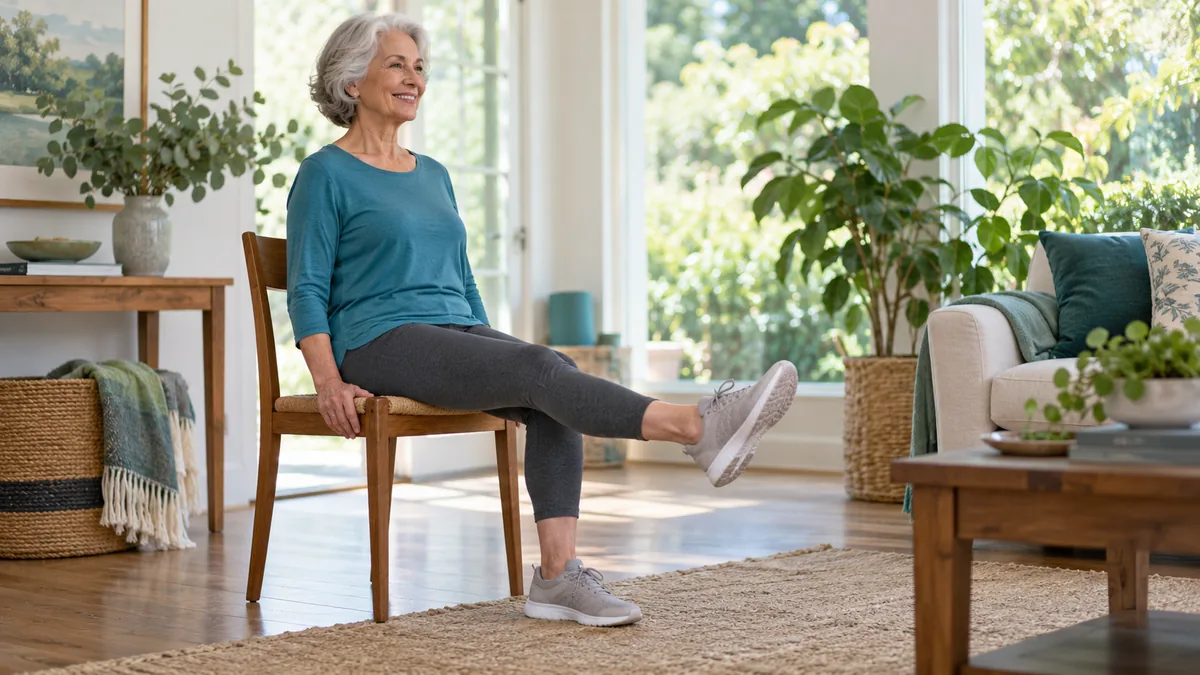
A comfortable knee extension
Slowly straighten one knee partway, then lower the foot to the floor. Keep the movement controlled and avoid snapping the knee straight. You can use a very small range. If the movement produces joint pain rather than ordinary effort, skip it and ask for guidance if the symptom persists.
Ankle circles or pumps
With one foot lightly raised or the heel supported, draw a small circle with your toes, then reverse direction. Alternatively, gently point and flex your foot. Keep the motion slow and comfortable. This is a simple option for a movement break because it needs little space and no special setup.
Try a supported standing option
Holding a secure counter, shift your weight gently from one foot toward the other without lifting either foot high. Keep both hands available for support. You can also take a small sideways step and return. If standing balance is uncertain, stay with seated exercises until you have advice about appropriate standing practice.
These movements can complement beginner strength exercises, but they should not all be counted as strength training or aerobic activity. Different kinds of movement serve different purposes. A comfortable sequence may be useful precisely because it is undemanding, especially when you want to change positions during a long seated day.
Turn the sequence into a useful habit
Choose three exercises and pair them with a reliable moment: after getting dressed, during a work break, or before an easy walk. A few minutes is enough to learn the movements. Our seated workday guide suggests practical cues, while morning exercise ideas offer another way to connect movement with your schedule.
After a week, ask whether the routine feels comfortable and easy to remember. Keep the movements that fit and remove ones that consistently irritate symptoms. Progress might mean smoother control or less hesitation, not a visibly larger range. A routine that respects your limits is more useful than one that repeatedly tests them.
Frequently Asked Questions
They may involve light effort, but this gentle sequence is movement practice. It does not need to leave you breathless or sore to be useful.
Many seated options fit at a desk if your chair is stable and the area is clear. Move away from rolling furniture when support is needed.
Use a comfortable range on each side. New, painful, or pronounced differences deserve professional assessment rather than forceful attempts to make both sides identical.