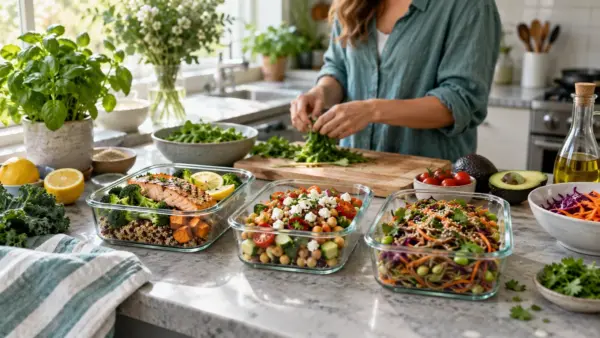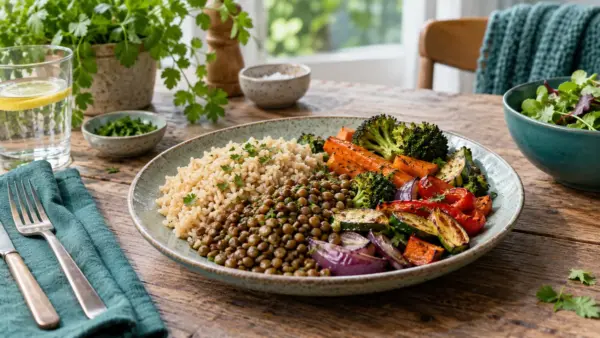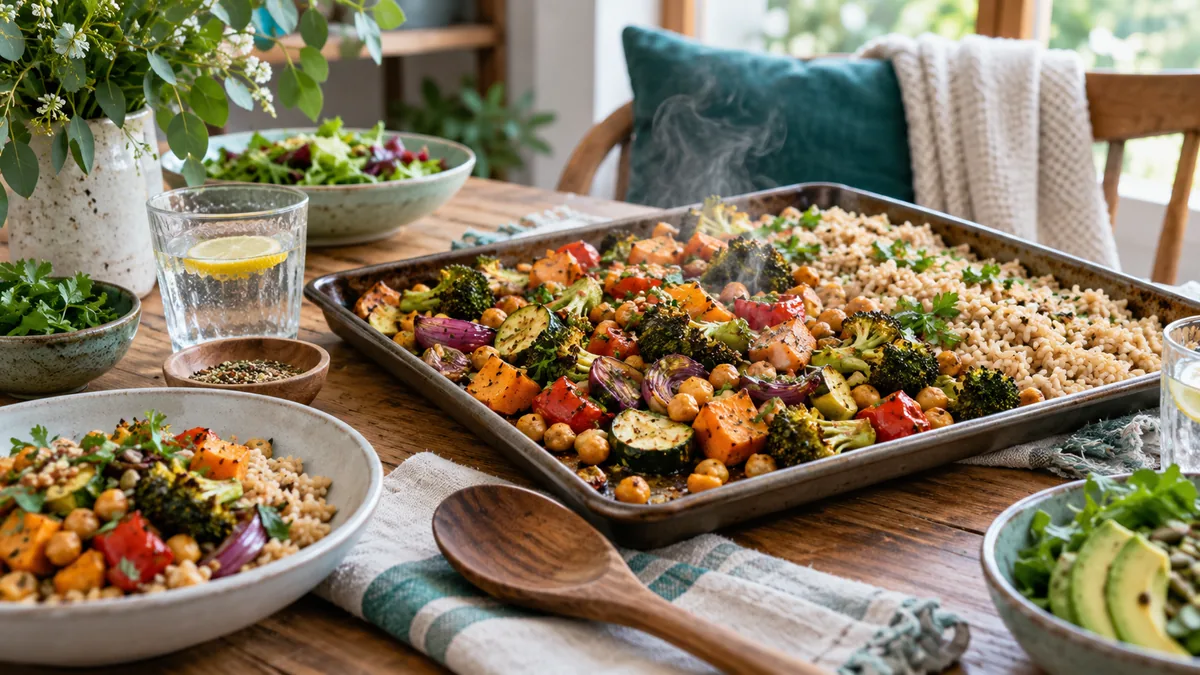

An easy dinner needs more than a short ingredient list. It should fit the equipment, time, and energy you actually have when evening arrives. A few flexible meal formats can make dinner easier to decide and easier to prepare. The examples below are starting combinations, with room for your preferences, appetite, and dietary needs.
Build around a practical foundation
Choose a grain or starchy food, a protein source, and vegetables or fruit, then add flavor. This might be rice, beans, and roasted vegetables; pasta with lentil sauce; or fish with potatoes and greens. You do not have to arrange each component separately. Our balanced plate guide explains how the same idea fits mixed dishes.
Before cooking, check what needs using and how much time you have. A dinner that takes fifteen minutes of active preparation but an hour in the oven may not fit a late evening. Keep at least one assembled or quick-cook meal available so dinner does not depend on following the original plan perfectly.
A sheet-pan vegetable dinner with a protein
Cut suitable vegetables into pieces that cook at similar speeds, toss with oil and preferred seasonings, and roast until tender. Serve with cooked beans, tofu, or another appropriately prepared protein and bread or a grain. Add a yogurt-based sauce, lemon dressing, or another flavor you enjoy rather than relying on dry vegetables alone.
If cooking raw meat or poultry, follow safe handling and temperature guidance and keep it from contaminating ready-to-eat foods. Different ingredients may need separate pans or different cooking times. A sheet-pan meal is a convenient format, not a reason to assume everything finishes safely at the same moment.
A bean and vegetable skillet
Sauté onion or another aromatic if you like, then add canned tomatoes, cooked beans, and vegetables suited to the pan. Frozen spinach, peppers, or zucchini can work. Simmer until everything is cooked through and the flavors come together. Serve with rice, bread, tortillas, or potatoes according to what you have.
Change the seasoning to create variety: cumin and paprika one evening, herbs and garlic another. Add a topping such as cheese, herbs, or seeds if appropriate. The same basic format can use lentils or chickpeas. Our everyday food staples guide explains why a few versatile ingredients can support several different meals.
Pasta with a substantial sauce
Cook pasta according to its instructions and pair it with a sauce containing a protein food and vegetables. Lentils in tomato sauce, beans with greens, or chicken with mushrooms are examples. Use a purchased sauce if that makes dinner possible, then add ingredients that improve the meal’s substance and flavor for you.
Keep some components separate when household preferences differ. Someone who dislikes mixed textures might prefer pasta, sauce, and vegetables served alongside one another. Whole-grain pasta is an option, but it is not necessary to replace a favorite pasta before you can make a useful dinner. Work with food people will willingly eat.
A flexible rice bowl
Combine cooked rice with tofu, eggs, beans, fish, or another protein, then add vegetables and a sauce. You can use warm roasted vegetables or a cool crunchy topping, depending on the meal. A bowl format is helpful when you have several small amounts of ingredients that do not form a complete dish individually.
For a quick example, serve rice with black beans, corn, cabbage, and salsa. Another version could use tofu, broccoli, carrots, and a ginger sauce. Follow package directions for ready-to-heat grains and proteins. If using previously cooked rice, check that it was cooled and refrigerated promptly and reheat it safely.
Soup or stew with something alongside
A pot of lentil soup, bean stew, or chicken and vegetable soup can cover dinner and another meal. Add bread, a potato, fruit, or another side according to appetite. If using purchased soup, consider what it already contains before deciding what to add. A broth-heavy soup may need a more substantial accompaniment.
Cook an amount that suits your storage space rather than automatically making the largest batch possible. Our meal planning guide explains how to schedule leftovers and freezing. A large pot is useful only when the food can be cooled, stored, and eaten safely within the appropriate time.
A dinner that requires almost no cooking
An assembled plate can include bread, hummus, cooked eggs or another ready-to-eat protein, vegetables, fruit, and additional foods you enjoy. A sandwich with soup or a substantial salad with beans and bread can also work. Dinner does not need a hot centerpiece or a complicated recipe to count as a meal.
This option is especially helpful during busy weeks or hot weather. Keep a few reliable components available and choose enough food to feel adequately fed. Our lunch ideas can often serve as dinner ideas too; the time of day does not determine which foods are appropriate.
Save tomorrow’s portion safely
Refrigerate perishable leftovers promptly, within two hours or one hour when conditions exceed 90°F. Divide large batches into shallow containers. USDA recommends using refrigerated leftovers within three to four days or freezing them, and reheating to 165°F. Label containers so the next meal is easy to identify and its storage time is clear.
Frequently Asked Questions
Prepare one helpful component or keep a few quick ingredients available. A grain, canned beans, frozen vegetables, and a preferred sauce can create several meals.
Yes. Choose meals that fit your needs and add a side or another component if you want more food or variety. Follow heating instructions carefully.
Use a shared base with optional toppings and sides. Bowls, wraps, potatoes, and assembled plates let people customize dinner while keeping preparation manageable.