Understanding the Financial Landscape of Low Vision Rehabilitation
Living with significant visual impairment presents profound challenges that extend far beyond the physical act of seeing. For individuals navigating life with low vision, specialized optical aids and assistive technologies are not merely luxuries; they are essential tools that restore independence, safety, and the ability to perform daily activities. However, the path to acquiring these critical devices is often complicated by financial barriers. The question of low vision devices insurance coverage is one of the most pressing concerns for patients, families, and healthcare providers alike. Navigating the complex web of Medicare, private insurance policies, and state-specific programs requires a deep understanding of what is covered, what is excluded, and the rigorous documentation required to secure benefits.
In the hospital setting, where ophthalmologists and optometrists work closely with rehabilitation specialists, the discussion regarding funding for assistive technology is a standard part of the care plan. Yet, many patients leave clinical appointments confused about their eligibility for reimbursement. The reality is that while some forms of medical assistance exist, low vision devices insurance coverage is rarely straightforward or universal. Unlike prescription eyeglasses or contact lenses which may have limited coverage under certain plans, high-tech magnifiers, electronic video magnifiers, and specialized reading aids often fall into a gray area between durable medical equipment (DME) and personal comfort items.
This comprehensive guide aims to demystify the process of securing financial support for low vision aids. We will explore the specific criteria that insurance companies use to determine coverage, the differences between federal programs like Medicare Part B and private commercial plans, and the role of hospital-based assessments in validating medical necessity. By understanding the nuances of low vision devices insurance coverage, patients can better advocate for themselves and ensure they receive the necessary tools without facing unexpected financial burdens. The journey from diagnosis to device acquisition involves a series of strategic steps, including detailed eye examinations, functional vision assessments, and precise coding for billing purposes.
The Distinction Between Medical Necessity and Personal Convenience
The cornerstone of any successful claim for low vision devices insurance coverage is the establishment of medical necessity. Insurance carriers, particularly government-funded programs, operate on strict guidelines that distinguish between treatments deemed medically necessary for health preservation and those considered beneficial for quality of life but not essential for survival or basic function. When a patient visits a hospital or a specialized low vision clinic, the provider must document not just the degree of visual acuity loss, but also how that loss impacts the patient’s ability to perform Activities of Daily Living (ADLs). These activities include reading mail, cooking meals, recognizing faces, and moving safely within the home environment.
If a patient has severe vision loss but can still manage their daily tasks using unaided vision or simple strategies, an insurance company may deny coverage for advanced devices. Conversely, if a patient demonstrates that without a specific piece of equipment, such as a handheld electronic magnifier or a screen-reading software interface, they would be unable to eat independently or read medication labels, the case for low vision devices insurance coverage becomes significantly stronger. This distinction is crucial because it shifts the narrative from “I want this to make my life easier” to “I need this to maintain my health and safety.” The burden of proof lies heavily on the healthcare provider to articulate this connection clearly in the medical record.
Hospital departments specializing in ophthalmology and rehabilitation play a pivotal role in this determination. During a formal evaluation, clinicians assess the patient’s residual vision, contrast sensitivity, field of view, and focusing ability. They then prescribe specific devices tailored to the patient’s unique deficits. It is important to note that not all devices prescribed in a clinical setting qualify for insurance reimbursement. A simple pair of high-powered reading glasses might be covered under a different benefit tier than a sophisticated desktop video magnifier system. Understanding these distinctions early in the treatment process helps prevent frustration and allows patients to explore alternative funding sources, such as charitable organizations or veterans’ benefits, if their primary insurance denies the claim.
The complexity of determining medical necessity is further compounded by the rapid evolution of assistive technology. What was considered a luxury item five years ago may now be a standard requirement for independent living due to advancements in digital accessibility. Insurance policies often lag behind technological innovation, creating a gap where the latest, most effective devices are not yet recognized as eligible for low vision devices insurance coverage. Patients must stay informed about current policy updates and be prepared to appeal denials with updated clinical data that highlights the evolving standards of care and the critical nature of modern assistive tools.
Defining Eligible Categories of Assistive Technology
To successfully navigate the claims process, it is helpful to categorize the types of low vision aids and understand how each is typically treated under insurance policies. The landscape of low vision devices insurance coverage varies significantly depending on whether the device is classified as a Durable Medical Equipment (DME), a prosthetic device, or an adaptive aid. Durable medical equipment generally refers to items that can withstand repeated use, are primarily used for a medical purpose, and are appropriate for use in the home. Many electronic magnifiers and large-print keyboards fall into this category, making them potential candidates for reimbursement.
- Optical Magnifiers: Traditional lens-based magnifiers, including stand magnifiers and handheld units, are frequently categorized as non-durable or personal convenience items. As a result, they are often excluded from standard low vision devices insurance coverage unless specifically prescribed for a post-surgical condition or acute injury.
- Electronic Video Magnifiers (CCTVs): These devices convert text or images into a digital display on a monitor, offering variable magnification and contrast control. Because they are more complex and serve a distinct therapeutic function, they have a higher likelihood of being covered under DME provisions, provided strict medical necessity criteria are met.
- Screen Reading Software: While hardware is often covered, the software itself may require separate licensing or be covered under a different benefit structure. Some insurance plans cover the computer hardware needed to run the software but exclude the cost of the application license.
- Tactile Aids: Devices such as braille displays and tactile markers are sometimes covered under broader disability benefits or specific state vocational rehabilitation programs rather than standard medical insurance.
Understanding these categories helps patients and providers set realistic expectations during the consultation phase. If a patient requires a device that falls outside the typical scope of low vision devices insurance coverage, the healthcare team can immediately begin exploring supplementary resources. This proactive approach ensures that the patient does not experience delays in receiving critical rehabilitation tools. Furthermore, hospitals often have social workers or financial counselors who can assist in identifying grants and foundations dedicated to supporting individuals with visual impairments, bridging the gap when traditional insurance pathways are blocked.
Medicare Coverage Guidelines and Limitations
For millions of Americans over the age of 65, Medicare serves as the primary source of health insurance. Consequently, understanding how Medicare handles low vision devices insurance coverage is vital for this demographic. Medicare Part B, which covers outpatient services and durable medical equipment, does provide some level of assistance for low vision aids, but the rules are exceptionally restrictive. Generally, Medicare covers only one pair of conventional eyeglasses or contact lenses following cataract surgery with an intraocular lens implant. Beyond this specific scenario, the coverage for other low vision devices is extremely limited.
When it comes to standalone low vision aids like magnifiers or electronic readers, Medicare typically classifies them as “not reasonable and necessary” for the general population. This means that unless a patient has a very specific, documented condition that cannot be addressed by standard corrective lenses, Medicare will likely deny the claim. The agency views these devices as primarily enhancing quality of life rather than treating a medical disease or restoring lost bodily function in a way that meets their strict definition of necessity. This creates a significant hurdle for seniors who rely on these tools to maintain their independence and continue managing their own medications and nutrition.
However, there are exceptions and alternative pathways within the Medicare ecosystem. In some cases, if a low vision device is deemed essential for a patient to perform a specific medical task, such as monitoring blood glucose levels or administering insulin, a provider may attempt to argue for coverage based on the direct link to diabetes management. This requires extensive documentation from the ophthalmologist and the primary care physician to demonstrate that without the device, the patient’s overall health would be compromised. Even with strong evidence, approval is not guaranteed, and the process often involves a prior authorization request and a detailed explanation of why no other method is feasible.
It is also worth noting that Medicare Advantage plans (Part C) offer an additional layer of complexity. These private plans must cover everything Original Medicare covers, but they can also offer extra benefits, such as vision allowances or discounts on specific devices. Some Medicare Advantage plans may include a stipend for low vision aids or partner with vendors to provide discounted rates. Patients enrolled in these plans should carefully review their Evidence of Coverage (EOC) documents to see if low vision devices insurance coverage extends beyond the baseline federal requirements. This variation underscores the importance of knowing exactly which type of Medicare plan a beneficiary holds.
The Prior Authorization Process for Federal Programs
Securing low vision devices insurance coverage through Medicare often necessitates a robust prior authorization process. Before a device is dispensed, the prescribing physician must submit a detailed letter of medical necessity to the Medicare Administrative Contractor (MAC) responsible for the patient’s region. This letter must outline the patient’s diagnosis, the specific visual limitations, the failure of previous corrective measures, and the exact device being recommended. The MAC then reviews the request against local coverage determinations (LCDs) to decide if the device qualifies for reimbursement.
- Submission of Clinical Data: The provider submits comprehensive test results, including visual acuity charts, visual field tests, and functional assessments.
- Device Specification: Detailed specifications of the proposed device must be included, ensuring it matches the codes accepted by Medicare.
- Review Period: The MAC reviews the submission, which can take several weeks, to verify compliance with coverage policies.
- Decision Notification: The provider receives a determination letter indicating approval, denial, or a request for additional information.
- Appeal Rights: If denied, the patient and provider have the right to appeal the decision with further clinical justification.
This rigorous process is designed to prevent fraud and ensure that taxpayer dollars are spent on medically essential items. However, it can be time-consuming and frustrating for patients eager to regain their independence. The key to success lies in the precision of the documentation. Vague descriptions of “difficulty reading” are insufficient. Providers must use objective metrics to show that the patient’s vision loss directly impairs their ability to function and that the specific device prescribed is the most appropriate solution. When done correctly, this process can unlock access to low vision devices insurance coverage even within the restrictive framework of federal programs.
Navigating Private Insurance and Commercial Plans
While Medicare sets a conservative baseline, private insurance companies often offer more flexible, though still variable, options for low vision devices insurance coverage. Commercial plans, including employer-sponsored group policies and individual marketplace plans, are regulated differently and have more discretion in defining what constitutes covered benefits. Some private insurers recognize the growing demand for assistive technology and have begun to include specific riders or add-ons that cover low vision aids. Others may classify these devices under their vision benefits package rather than their medical benefits package, which can affect deductibles and copayments.
The variability among private insurers is vast. One plan might cover 80% of the cost of a video magnifier after the deductible is met, while another might cover nothing at all. This inconsistency makes it difficult for patients to predict costs before seeking treatment. To mitigate this risk, patients should contact their insurance provider directly before visiting the specialist. Asking specific questions about “durable medical equipment for vision,” “assistive technology for low vision,” and “prosthetic devices” can clarify the scope of coverage. It is also advisable to ask if the insurer has a preferred vendor list, as using an in-network provider can significantly reduce out-of-pocket expenses.
In addition to standard medical and vision plans, some commercial policies offer supplemental benefits for disabilities. If a patient has been diagnosed with a permanent visual impairment that affects their ability to work, they may qualify for additional benefits under short-term or long-term disability riders. These policies sometimes include provisions for workplace accommodations and home modifications, which can encompass the purchase of specialized low vision devices. The intersection of medical insurance and disability benefits represents a critical avenue for securing low vision devices insurance coverage for those whose vision loss has resulted in a loss of income or employment.
Hospitals and clinics often employ insurance coordinators who specialize in verifying benefits for complex cases. These professionals can help patients interpret their policy language, identify hidden benefits, and prepare the necessary paperwork for submission. They act as advocates, ensuring that the medical necessity argument is framed in a way that aligns with the specific guidelines of the patient’s private insurer. By leveraging the expertise of these coordinators, patients can avoid common pitfalls, such as submitting claims for devices that are explicitly excluded from their plan, and increase the likelihood of a successful outcome.
Comparing Coverage Options Across Major Payers
To better understand the landscape of low vision devices insurance coverage, it is helpful to compare how different types of payers typically handle these claims. The table below outlines the general tendencies of major insurance categories regarding low vision aids.
| Insurance Type | Typical Coverage Status | Key Requirements | Common Exclusions |
|---|---|---|---|
| Original Medicare (Part B) | Limited / Rarely Covered | Strict medical necessity; Post-cataract only for glasses | Most standalone magnifiers and electronic aids |
| Medicare Advantage | Variable / Plan Specific | Check EOC for vision allowances or DME riders | High-cost devices not listed in plan benefits |
| Private Commercial Health | Variable / Often Partial | DME classification; Prior authorization often required | Non-medical grade devices; Cosmetic aids |
| Private Vision Plans | Limited / Allowance Based | Annual allowance limits; Frame/lens focus | High-tech electronic devices; Custom solutions |
| State Medicaid | Highly Variable by State | Income eligibility; State-specific waiver programs | Devices not deemed medically essential by state |
This comparison highlights that there is no one-size-fits-all answer to the question of low vision devices insurance coverage. Patients must investigate their specific plan details to understand their rights and limitations. The variability also suggests that patients should not assume their coverage is identical to that of a friend or family member. Each policy is a unique contract with its own set of rules, exclusions, and definitions of medical necessity. Taking the time to thoroughly research these details can save patients from unexpected bills and help them plan their rehabilitation strategy effectively.
The Role of Hospital Assessments in Claim Approval
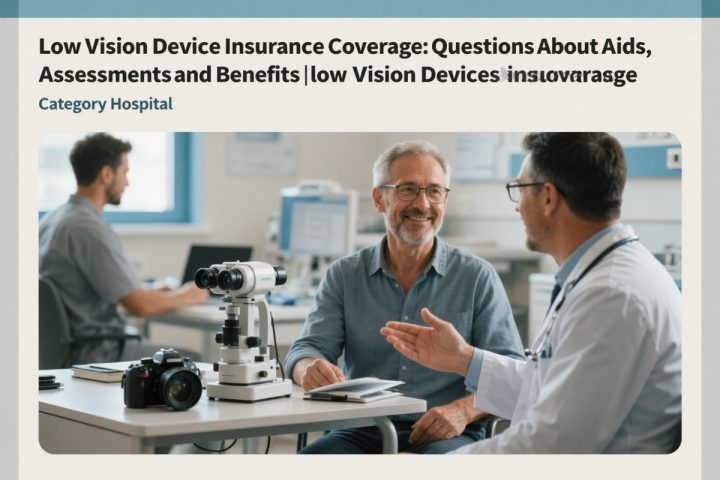
The foundation of any successful claim for low vision devices insurance coverage rests on the quality of the initial hospital assessment. When a patient enters a hospital system for a low vision evaluation, they are not just receiving a prescription; they are undergoing a comprehensive functional analysis that serves as the legal and medical basis for insurance reimbursement. These assessments are conducted by certified low vision therapists, ophthalmologists, or optometrists who specialize in the intersection of medicine and rehabilitation. Their goal is to quantify the patient’s visual capabilities and limitations with precision, providing the data needed to justify the expense of expensive assistive technology.
During the assessment, the clinician evaluates various aspects of vision, including central acuity, peripheral field, contrast sensitivity, and color perception. More importantly, they observe the patient performing real-world tasks. Does the patient struggle to read a menu? Can they identify coins on a table? Are they able to navigate a hallway without bumping into objects? These observations are documented in detail and translated into a formal report. This report is the primary document submitted to insurance companies to prove that the requested device is not a convenience but a medical necessity. Without this rigorous documentation, even the most advanced device will likely be denied under low vision devices insurance coverage policies.
Hospitals also play a crucial role in training patients on how to use these devices. Insurance companies often require proof that the patient has received instruction on the proper use of the equipment before approving payment. The hospital staff provides hands-on training, ensuring that the patient can maximize the utility of the device. This training component is often billed separately or bundled into the overall rehabilitation fee. It reinforces the medical nature of the intervention, distinguishing it from a simple retail purchase. By integrating education and therapy into the device provision, hospitals strengthen the argument that the equipment is an integral part of a treatment plan.
Furthermore, hospital-based assessments allow for the testing of multiple devices before a final selection is made. This trial period is invaluable for both the patient and the insurance carrier. It ensures that the device selected is the best fit for the patient’s specific needs, reducing the likelihood of returns or dissatisfaction. When an insurance company sees that a thorough trial and error process was conducted, they are more likely to view the final prescription as well-reasoned and justified. This collaborative approach between the hospital and the payer ultimately leads to better outcomes for the patient and more efficient use of funds for the insurance provider.
Documentation Essentials for Successful Claims
To ensure that the hospital assessment translates into approved low vision devices insurance coverage, providers must adhere to strict documentation standards. The following elements are critical for a successful claim:
- Diagnosis Codes: Accurate ICD-10 codes that reflect the severity and nature of the visual impairment.
- Functional Limitations: A clear description of how the vision loss impacts daily activities, supported by observational notes.
- Device Justification: An explanation of why the specific device is necessary, including why less expensive alternatives were deemed ineffective.
- Prior Treatment History: Documentation of previous attempts to correct the vision with standard lenses or other methods.
- Therapist Certification: Proof that the evaluating professional is certified in low vision rehabilitation.
By meticulously compiling these details, the healthcare team creates a compelling narrative that aligns with insurance requirements. This attention to detail is essential in a system where every claim is scrutinized for compliance. Patients should feel empowered to ask their providers about the documentation process and ensure that all necessary forms are completed accurately before the claim is submitted. This proactive stance can significantly reduce the turnaround time for approvals and minimize the stress associated with financial uncertainty.
Alternative Funding Sources and Support Programs
Despite the efforts of hospitals and insurance coordinators, many patients still face gaps in low vision devices insurance coverage. When insurance denials occur or when the out-of-pocket costs remain prohibitive, patients must look to alternative funding sources. Fortunately, a network of non-profit organizations, government agencies, and charitable foundations exists specifically to support individuals with visual impairments. These organizations often provide grants, loans, or direct donations of equipment to bridge the financial divide.
Veterans Affairs (VA) benefits represent one of the most robust sources of funding for low vision aids. For veterans with service-connected disabilities, the VA often covers a wide range of assistive technologies, including electronic magnifiers, screen readers, and specialized lighting. The VA’s commitment to veteran care extends to ensuring that those with visual impairments can maintain their independence and return to civilian life. Veterans should consult with their local VA facility to learn about available resources and the application process for obtaining low vision devices.
State Vocational Rehabilitation (VR) agencies also play a significant role in funding assistive technology. These state-run programs are designed to help individuals with disabilities prepare for, obtain, and retain employment. If a low vision device is deemed necessary for a patient to work or train for a job, VR agencies may cover the full cost of the equipment. This includes not only the device itself but also related training and maintenance. Patients should contact their state’s VR office to determine eligibility and initiate the application process, as these programs can be a lifeline for those who have exhausted their insurance options.
Additionally, numerous private foundations and charities, such as the Lions Clubs International, the American Foundation for the Blind, and local community organizations, offer financial assistance for low vision aids. These groups often rely on donations and volunteer efforts to support individuals in need. While the amounts available may vary, they can make a significant difference in covering co-pays, deductibles, or the full cost of a device. Patients are encouraged to reach out to these organizations early in their journey, as waiting until after an insurance denial may delay access to critical support.
Frequently Asked Questions
Does Medicare cover electronic video magnifiers for low vision?
Medicare Part B generally does not cover electronic video magnifiers (CCTVs) as they are often classified as durable medical equipment that is not considered “reasonable and necessary” for the general population. However, exceptions can be made if a patient can demonstrate strict medical necessity, such as the inability to perform critical self-care tasks like reading medication labels without the device. In rare cases involving specific post-surgical conditions, coverage might be granted, but prior authorization and extensive documentation are required.
What is the difference between optical and electronic low vision devices regarding insurance?
Insurance companies typically treat optical devices, such as handheld magnifiers and stand magnifiers, as personal convenience items or non-durable goods, meaning they are rarely covered under low vision devices insurance coverage. Electronic devices, on the other hand, are more likely to be classified as Durable Medical Equipment (DME) due to their complexity and therapeutic value. Consequently, electronic video magnifiers have a higher chance of being reimbursed if they meet the strict criteria for medical necessity.
Can I get insurance coverage for low vision devices if I am under 65?
Yes, individuals under 65 can potentially access low vision devices insurance coverage through private commercial insurance plans or Medicaid. Private plans vary widely in their benefits, so it is essential to review the specific policy details. Medicaid coverage depends on the state, as each state determines its own guidelines for covering assistive technology for disabled adults. Additionally, Medicare eligibility for those under 65 is possible if the individual has received Social Security Disability Insurance (SSDI) for at least 24 months.
How do I appeal a denial of my low vision device claim?
If a claim for low vision devices insurance coverage is denied, you have the right to appeal. The first step is to request the specific reason for the denial in writing. Then, work with your healthcare provider to gather additional clinical data, such as updated visual field tests or letters of medical necessity that address the insurer’s concerns. Submit a formal appeal letter along with the new documentation to the insurance company. If the internal appeal is denied, you may have the option for an external review by an independent third party.
Are there tax deductions for purchasing low vision devices?
Yes, in many cases, the cost of low vision devices may be deductible as a medical expense on your federal income tax return if you itemize deductions. The IRS allows taxpayers to deduct unreimbursed medical expenses that exceed a certain percentage of their adjusted gross income. To qualify, the device must be primarily for the prevention or alleviation of a physical defect or illness. Keep detailed receipts and a letter from your doctor stating that the device is medically necessary to support your tax deduction claim.
Sources
- Centers for Medicare & Medicaid Services (CMS) – Durable Medical Equipment Coverage
- American Academy of Ophthalmology – Low Vision Resources
- National Federation of the Blind – Assistive Technology Guide
- U.S. Department of Veterans Affairs – Vision Rehabilitation Services
- American Speech-Language-Hearing Association – Low Vision Information