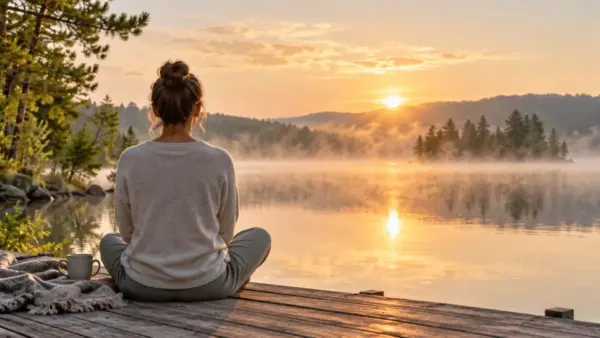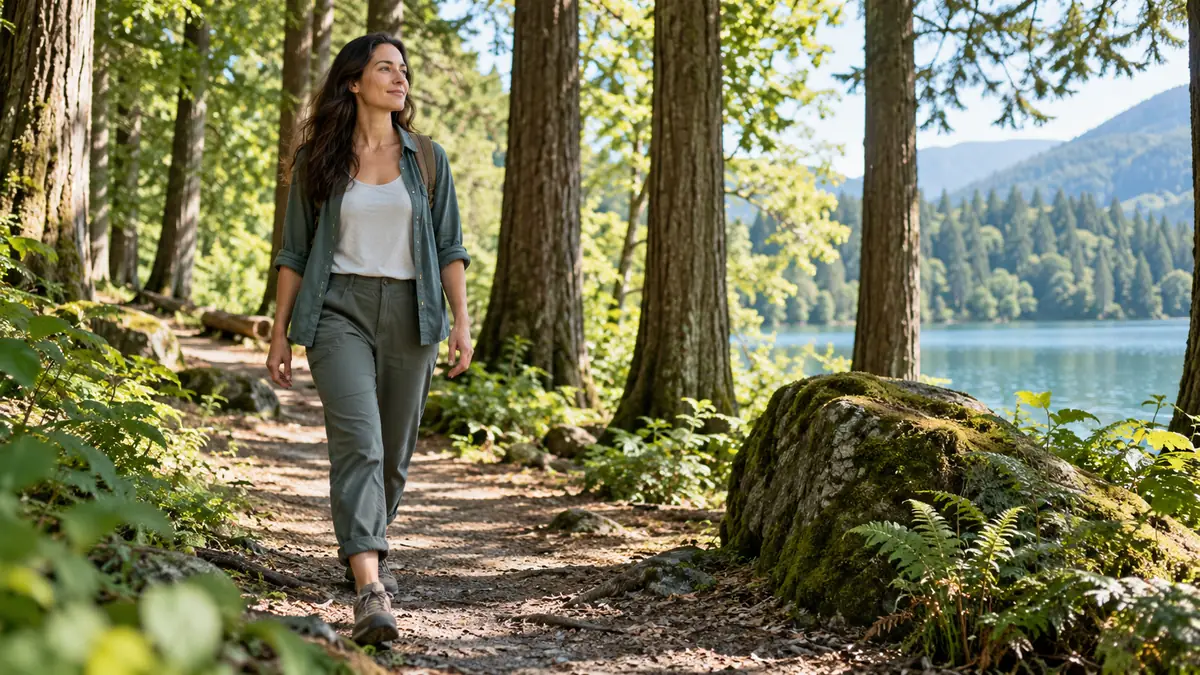

A tree outside a window, a familiar garden, or water moving beside a path can give your attention something different to rest on. You may notice curiosity, companionship, or a change of perspective. You may also feel much the same as before. Nature does not require a particular emotional response.
The National Park Service describes parks as places that can support wellbeing. For an individual visit, the useful question is personal: what does this setting make possible for you? Explore the experience without treating it as a cure or another wellness task to complete.
Notice what draws your interest
Begin with whatever catches your attention naturally. It could be an uneven leaf, a bird’s movement, or the way light changes on a wall. You do not have to select the most beautiful object or identify it correctly.
Stay with the detail briefly, then let your attention move. Curiosity can be ordinary: “Was that branch always bent?” or “Why is the ground lighter here?” There is no requirement to turn the observation into a lesson about your life.
Let the setting interrupt your usual story
When you are preoccupied, the same thought may fill the available space. Looking at something outside that story can offer another point of attention. You are not trying to prove the concern is unimportant; you are allowing the environment to be present too.
For example, while worrying about an unanswered message, you might also notice the sound of leaves or people passing nearby. The worry may remain. A useful moment can contain both concern and awareness of where you are.
For other brief attention experiments, see everyday mindfulness habits. Stop or switch activities if any practice increases distress. External observation is an option, not an obligation.
Allow an ordinary response
Outdoor time is often described as instantly peaceful. That expectation can be frustrating when your mind remains busy or the place feels noisy, crowded, or unfamiliar. You do not need to search harder for a benefit.
Ask whether something about the experience is worthwhile even without a mood change. You might enjoy a conversation, learn where a path leads, or simply appreciate being in a different setting. Those are valid reasons to continue.
You can also decide that the setting does not suit you today. Returning indoors, choosing company, or doing another activity is a reasonable response. A preference for comfort is useful information about what supports you.
Explore connection through shared attention
With another person, point out something you both can notice: a changing sky, a familiar tree, or an unexpected sound. Shared attention can give a conversation an easy starting point without requiring an immediate personal disclosure.
Our guide to building meaningful connections offers ways to develop contact gradually. Nature can provide a setting for connection, while the quality of the relationship still matters.
Choose reflection or relief from reflection
Some visits may be a good time to consider a question. Keep it narrow: “What do I need to ask for this week?” Notice whether thinking in this setting produces clarity or simply continues the same loop.
Other visits can be a break from deliberate self-examination. Describe colors, listen to ordinary sounds, or talk about a shared interest. You do not need to use every quiet moment for personal growth.
If a useful thought arrives, record a few words afterward. Reflective journaling can help turn that observation into a question or action. Leave the notebook closed when writing would pull you away from an experience you want to enjoy.
Make room for memory and mixed feelings
Places can carry associations. A garden may remind you of a relative; a stretch of water may recall a difficult period. Pleasant scenery does not guarantee pleasant memories, and mixed feelings do not mean you are responding incorrectly.
Choose whether to stay with the memory, speak about it, or shift attention. If you feel overwhelmed, orient to familiar details, leave the setting, or contact someone supportive. You do not need to remain in a place because it is supposed to be healing.
NCCIH notes that mindfulness practices can produce negative experiences for some people. Avoid using inward attention or prolonged quiet as a test of endurance, especially when it intensifies distress.
Bring one observation back into the day
Afterward, identify something specific you noticed or appreciated. It might be a conversation, a shape you want to draw, or the discovery that company suits you better than solitude. No score or streak is necessary.
For routes, accessibility, supplies, weather, air quality, and sun protection, see making outdoor time part of everyday wellness. Practical conditions deserve attention, but they need not become the focus of every reflective visit.
Persistent anxiety, low mood, or difficulty functioning deserves professional support. Time in nature can accompany care and ordinary connection. It should not become a reason to delay help or blame yourself when an outdoor break does not change how you feel.
Frequently Asked Questions
That is a valid experience. You might enjoy curiosity, conversation, or a change of setting instead. You can also choose another activity without treating the visit as a failed attempt.
No. You can talk, draw, read, or simply be there. If a deliberate attention exercise feels uncomfortable, stop and choose something that suits you better.
Yes. You can notice changes in light, weather, movement, or your own interests. Repetition does not require the experience to feel identical, and you do not need a novel destination.