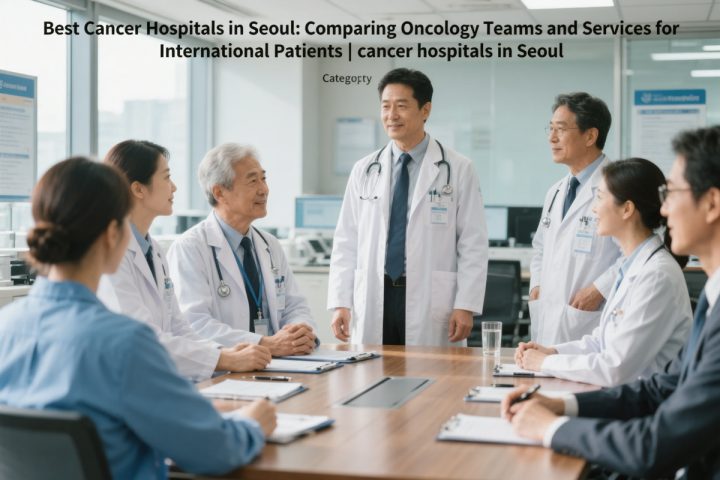
Introduction to World-Class Oncology Care in Seoul
When a patient or their family receives a cancer diagnosis, the immediate search for the most effective treatment often leads to international borders. For individuals seeking advanced oncology care, cancer hospitals in Seoul have emerged as a premier global destination, renowned for their technological sophistication, highly specialized medical teams, and patient-centric approach. The capital of South Korea has cultivated a reputation that extends far beyond its borders, attracting thousands of international patients annually who are looking for cutting-edge treatments that may not be available or accessible in their home countries.
The landscape of healthcare in South Korea is defined by a unique blend of rapid innovation and rigorous quality standards. Leading institutions in Seoul offer a comprehensive range of services, from early-stage detection and minimally invasive surgeries to complex immunotherapy protocols and proton beam therapy. These facilities are equipped with state-of-the-art imaging systems, robotic surgical suites, and dedicated international patient centers designed to eliminate language barriers and cultural friction. For those navigating the difficult journey of cancer treatment, choosing the right facility is a decision that requires careful consideration of clinical expertise, service infrastructure, and cost-effectiveness.
This guide provides an in-depth comparison of the leading cancer hospitals in Seoul, focusing on the specific strengths of their oncology teams, the breadth of their service offerings, and the logistical support provided to international visitors. Whether you are considering treatment for lung, breast, liver, or gastrointestinal cancers, understanding the nuances between these top-tier institutions is essential. We will explore how these hospitals differentiate themselves through multidisciplinary tumor boards, personalized treatment plans, and the integration of traditional medicine with modern science, ensuring that every patient receives the highest standard of care possible.
Top-Tier Institutions: A Comparative Overview of Seoul’s Leading Cancer Centers
Seoul is home to several world-class medical complexes that specialize exclusively in oncology or house some of the most advanced cancer centers within larger university hospitals. When evaluating cancer hospitals in Seoul, it is crucial to distinguish between standalone cancer centers and the oncology departments of major general hospitals, as each offers distinct advantages depending on the complexity of the case and the patient’s specific needs.
Among the most prominent names is Samsung Medical Center, which consistently ranks among the top hospitals globally for patient satisfaction and medical excellence. Their Cancer Center is a massive, integrated facility featuring over 40 specialized clinics and research institutes. The center is particularly noted for its leadership in precision medicine and genetic testing, allowing for highly tailored treatment plans based on the molecular profile of a patient’s tumor. The sheer scale of operations at Samsung Medical Center ensures that patients have access to a wide array of specialists, including thoracic surgeons, gynecologic oncologists, and hematologists, all working under one roof.
Another critical player in the Seoul market is Severance Hospital, affiliated with Yonsei University Health System. Known for its historical significance and academic rigor, Severance Hospital boasts a robust research program that often places it at the forefront of clinical trials. The hospital’s cancer center is celebrated for its multidisciplinary approach, where surgeons, radiation oncologists, and medical oncologists collaborate intensively before formulating a treatment strategy. This collaborative model is particularly beneficial for patients with rare or complex malignancies that require input from multiple specialties simultaneously.
In addition to these giants, Asan Medical Center stands out for its seamless integration of technology and patient care. Asan is frequently recognized for its high volume of complex procedures and its efficient operational workflows, which can significantly reduce wait times for international patients. The hospital’s Cancer Center is equipped with advanced radiation therapy units, including linear accelerators capable of delivering highly precise doses to tumors while sparing surrounding healthy tissue. Furthermore, Asan has invested heavily in creating a welcoming environment for foreign patients, offering dedicated concierge services that handle everything from visa assistance to airport transfers.
For patients specifically interested in robotic surgery and minimally invasive techniques, St. Mary’s Hospital (Catholic University) and Seoul National University Hospital (SNUH) are also top contenders. SNUH, as the flagship university hospital of Korea, serves as a referral center for the most difficult cases and is a hub for academic research. Its cancer center is known for pioneering new surgical techniques and participating in international studies that define the future of oncology. Meanwhile, St. Mary’s has gained international acclaim for its specialized programs in breast cancer and head and neck oncology, utilizing robotic-assisted surgery to achieve superior cosmetic and functional outcomes.
Technology and Innovation Driving Treatment Outcomes
The competitive edge of cancer hospitals in Seoul lies not just in human expertise but in the aggressive adoption of cutting-edge technology. Many of these institutions have become early adopters of robotic surgical systems, such as the da Vinci Surgical System, which allows for greater precision in delicate procedures like prostatectomies or complex pelvic surgeries. This technology reduces recovery times and minimizes scarring, which is a significant factor for international patients who may need to return home quickly after treatment.
Beyond robotics, the integration of artificial intelligence (AI) in diagnostic imaging is transforming the early detection capabilities of Seoul’s oncology centers. AI algorithms are now used to analyze CT scans and MRIs with a level of accuracy that surpasses human interpretation in certain scenarios, helping to identify small tumors that might otherwise be missed. Additionally, many hospitals in Seoul utilize Proton Beam Therapy, a form of radiation treatment that uses protons rather than X-rays to target cancer cells. This method is particularly advantageous for treating cancers located near sensitive organs, such as brain tumors or pediatric cancers, as it significantly reduces the radiation dose to surrounding healthy tissues.
The commitment to innovation extends to immunotherapy and targeted therapy as well. Seoul’s leading cancer centers are often the first in Asia to introduce new checkpoint inhibitors and CAR-T cell therapies for blood cancers and solid tumors. Patients traveling to Seoul for treatment can expect access to the latest FDA-approved drugs and those currently in Phase III clinical trials, providing hope for cases that have proven resistant to conventional chemotherapy. This dynamic environment ensures that patients are not just receiving standard care but are potentially accessing the next generation of cancer treatments.
Comparing Oncology Teams: Expertise and Multidisciplinary Collaboration
The cornerstone of successful cancer treatment is the quality of the medical team involved. In Seoul, the structure of oncology care is fundamentally different from the siloed approach often found in other parts of the world. At the best cancer hospitals in Seoul, treatment is delivered through Multidisciplinary Tumor Boards (MDTBs), a rigorous process where experts from various disciplines convene to discuss every case before a single treatment begins.
This collaborative model ensures that a patient does not receive a fragmented plan from a surgeon who only sees the tumor, a radiologist who only sees the images, or a chemist who only considers drug interactions. Instead, a panel comprising surgical oncologists, medical oncologists, radiation oncologists, pathologists, radiologists, and sometimes palliative care specialists reviews the patient’s complete medical history, biopsy results, and imaging data together. They debate the pros and cons of various approaches—whether surgery should precede chemotherapy, if radiation is necessary, or if a clinical trial is the best option—and arrive at a consensus treatment plan. This unified voice provides patients with a clear, evidence-based roadmap for their recovery.
The expertise of the physicians in Seoul is built upon a foundation of intense training and high-volume practice. Korean medical doctors undergo a grueling residency and fellowship process, and those specializing in oncology often perform hundreds of complex procedures annually. This high volume of cases translates into refined skills and deep institutional knowledge. For example, hepatobiliary surgeons in Seoul routinely perform liver resections and transplants that are considered among the most complex in the world, resulting in survival rates that often exceed global averages. Similarly, gynecologic oncologists in Seoul are renowned for their ability to perform radical surgeries while preserving organ function and fertility when possible.
- Specialized Sub-Specialties: Unlike general practitioners, the oncologists in Seoul often sub-specialize further, focusing exclusively on specific types of cancer such as neuro-oncology, sarcoma, or lymphoma, ensuring that the patient is treated by a true expert in that specific field.
- Research Integration: Many of the lead physicians are also active researchers, publishing papers and leading clinical trials. This dual role means they are constantly updating their knowledge base and applying the latest scientific discoveries directly to patient care.
- Language Proficiency: Recognizing the influx of international patients, many top hospitals have recruited English-speaking doctors or established teams of interpreters who work alongside the medical staff, ensuring that communication remains clear and accurate throughout the treatment journey.
The dedication of these teams extends beyond the operating room. Follow-up care and survivorship programs are integral parts of the service offered. After the primary treatment is completed, patients are enrolled in long-term monitoring programs that track their health, manage side effects, and screen for recurrence. This continuity of care is vital for maintaining quality of life and ensuring early detection of any potential issues. The holistic approach of Seoul’s oncology teams addresses not just the disease, but the patient as a whole person, integrating psychological support and nutritional counseling into the overall treatment plan.
Comprehensive Services and Patient-Centric Support Systems
For international patients, the logistical and emotional challenges of traveling abroad for cancer treatment can be overwhelming. The best cancer hospitals in Seoul have developed comprehensive international patient services designed to mitigate these stressors and create a seamless experience from the moment a patient decides to travel until they return home. These services go far beyond simple translation; they encompass a full spectrum of support tailored to the unique needs of foreign nationals.
A key component of this support is the International Patient Center (IPC). Located within the main hospital campuses, these centers act as a single point of contact for all foreign inquiries. Upon initial contact, usually via email or phone, a dedicated case manager is assigned to the patient. This manager coordinates the entire journey, including scheduling appointments with the appropriate specialists, arranging medical visas, and organizing accommodation near the hospital. Some hospitals even provide temporary housing solutions for patients and their families who need to stay in Seoul for extended periods during treatment cycles.
Language support is another critical service. While many senior physicians in Seoul speak English fluently, the IPC ensures that there are professional medical interpreters available for all consultations, examinations, and informed consent discussions. This eliminates the risk of miscommunication regarding diagnosis, treatment risks, and medication instructions. Furthermore, many hospitals offer translated medical records and discharge summaries in multiple languages, facilitating smoother follow-up care with local doctors upon the patient’s return to their home country.
- Visa Assistance: Hospitals assist in issuing medical invitation letters required for obtaining medical visas from South Korean embassies, streamlining the entry process for patients and their accompanying family members.
- Accommodation Coordination: Partnerships with nearby hotels and apartments allow for discounted rates and easy booking for patients requiring long-term stays.
- Transportation Services: Dedicated shuttle services or arrangements for private medical transport ensure safe and comfortable travel between the airport, hotel, and hospital.
- Nutritional and Dietary Support: Given the diverse dietary requirements of international patients, hospital cafeterias and catering services often provide menus that cater to specific cultural or religious preferences, as well as therapeutic diets required during chemotherapy or post-surgery recovery.
- Patient Advocacy: Case managers advocate for the patient’s needs within the hospital system, ensuring that appointments run on time and that any concerns are addressed promptly by the administration.
The physical environment of these hospitals is also designed with international comfort in mind. Waiting areas are spacious and often feature amenities like Wi-Fi, charging stations, and quiet zones. Private rooms are standard, offering privacy and a homelike atmosphere that aids in recovery. Many facilities also include prayer rooms, multilingual signage, and cultural sensitivity training for all staff members to ensure that patients from all backgrounds feel respected and cared for.
Beyond the administrative and logistical support, the clinical services themselves are vast and varied. In addition to standard chemotherapy and radiation, patients have access to integrative medicine options. Some hospitals offer acupuncture, herbal medicine consultations, and mindfulness programs to help manage pain, nausea, and anxiety associated with cancer treatment. This holistic approach aligns with the growing global demand for complementary therapies that enhance the efficacy of conventional treatments and improve overall well-being.
Cost Analysis and Financial Considerations for International Patients
One of the primary drivers for international patients seeking treatment in Seoul is the cost-effectiveness compared to Western countries. While prices can vary significantly depending on the type of cancer, the stage of the disease, and the specific treatment protocol chosen, cancer hospitals in Seoul generally offer competitive pricing structures. The transparency of costs is a major advantage, as many hospitals provide detailed price estimates upfront, preventing unexpected financial burdens later in the treatment process.
When comparing costs, it is important to consider the “all-inclusive” nature of the fees in Korea. In many Western healthcare systems, patients face separate bills for the surgeon, the anesthesiologist, the hospital facility, the pathology lab, and the pharmacy. In contrast, Seoul’s top hospitals often bundle these services into a comprehensive package price. This includes pre-operative tests, the procedure itself, post-operative care, and a set number of days of hospitalization. This bundling simplifies budgeting and makes it easier for patients to understand exactly what they are paying for.
| Treatment Type | Estimated Cost Range (USD) | Comparison to US Average | Notes |
|---|---|---|---|
| Chemotherapy Cycle (Standard Regimen) | $3,000 – $6,000 | Approx. 50-60% lower | Varies by drug type; generic vs. brand name. |
| Robotic Surgery (e.g., Prostatectomy) | $25,000 – $40,000 | Approx. 40-50% lower | Includes surgeon, anesthesia, and hospital stay. |
| Radiation Therapy (Course of 20-30 sessions) | $10,000 – $20,000 | Approx. 60-70% lower | Proton therapy may cost more but is still competitive. |
| Immunotherapy (Monthly Dose) | $5,000 – $10,000 | Comparable or slightly lower | Drug costs dominate; varies by specific agent. |
| Hospital Room (Private, Per Night) | $300 – $600 | Significantly lower | Includes nursing care, meals, and basic amenities. |
It is worth noting that while the base costs are lower, the total expense will depend on the length of the hospital stay and the complexity of the case. For instance, a patient undergoing a complex liver transplant or extensive bone marrow transplant will incur higher costs due to the prolonged ICU stay and the need for specialized medications. However, even in these high-cost scenarios, the total bill in Seoul often remains lower than in the United States or Europe, even after accounting for travel and accommodation expenses.
Insurance coverage for international patients can be a complex issue. Most South Korean hospitals do not accept direct billing from foreign insurance companies for non-residents. Instead, patients are typically required to pay upfront or arrange payment through a third-party medical tourism agency. Once the treatment is complete, patients can submit the itemized receipts to their domestic insurance provider to seek reimbursement. It is advisable for patients to check with their insurance providers beforehand to understand their out-of-country coverage limits and documentation requirements.
Additionally, many hospitals offer financing options or payment plans for international patients who cannot pay the full amount immediately. Some institutions have partnerships with international credit card processors and banking services to facilitate smooth transactions. The financial transparency and flexibility provided by these hospitals make them an attractive option for patients who are self-insured or whose domestic insurance does not cover overseas treatment.
The Patient Journey: From Diagnosis to Recovery in Seoul
Understanding the typical workflow of a patient at a cancer hospital in Seoul helps demystify the process and sets realistic expectations. The journey usually begins with a remote consultation, where the patient submits their medical records, imaging files, and pathology reports to the hospital’s international department. A specialist reviews these documents and provides a preliminary assessment, including a recommended treatment plan and a cost estimate. This step is crucial for determining eligibility and preparing for the trip.
Once the patient arrives in Seoul, the process accelerates. Within 24 to 48 hours, the patient undergoes a series of diagnostic tests to confirm the diagnosis and stage the cancer. These tests may include PET-CT scans, MRI, endoscopies, and biopsies. Because the hospital ecosystem is so integrated, these tests are often scheduled consecutively, minimizing the time the patient spends waiting. The results are then presented at the Multidisciplinary Tumor Board meeting, where the final treatment plan is approved.
Treatment execution follows a structured timeline. For surgical patients, the operation is performed by a senior surgeon, often using robotic assistance. Post-operative care is intensive, with patients monitored closely in the recovery unit before being moved to a private ward. For chemotherapy or radiation patients, the schedule is meticulously planned to optimize efficacy while managing side effects. Nurses and pharmacists work closely with the patient to administer medications and monitor for adverse reactions.
Throughout the treatment period, the patient maintains regular contact with their case manager, who acts as a bridge between the patient and the medical team. If complications arise, the response is swift due to the hospital’s readiness and the availability of specialists. Once the primary treatment is concluded, the focus shifts to rehabilitation and discharge planning. Patients receive detailed discharge summaries in their native language, along with prescriptions and instructions for ongoing care.
Follow-up care is often coordinated remotely. Many hospitals have telemedicine capabilities that allow patients to have video consultations with their doctors back in their home countries or via the Seoul hospital’s platform. This ensures continuity of care and peace of mind for the patient and their family. The goal is not just to treat the cancer but to empower the patient to manage their health effectively after returning home.
Frequently Asked Questions
What is the typical timeline for receiving treatment after arriving in Seoul?
Most international patients can begin their treatment within 3 to 7 days of arrival. This timeline depends on the speed of completing necessary diagnostic tests, such as biopsies and advanced imaging, and the scheduling of the Multidisciplinary Tumor Board review. Urgent cases may be prioritized and started sooner, while elective procedures might require a few extra days for preparation.
Do I need to bring my own medical records, or will the hospital handle the transfer?
You must bring your own medical records, including pathology slides, biopsy reports, and recent imaging scans (CDs or digital copies). While the hospital can request records from your home country, this process can take weeks. Bringing your own documents allows for faster evaluation and quicker initiation of the treatment plan.
Are there language barriers, and how is communication handled?
While many doctors speak English, the hospitals provide professional medical interpreters for all consultations to ensure absolute clarity. Additionally, the International Patient Center assigns a dedicated case manager who speaks the patient’s language to assist with logistics, paperwork, and daily communication throughout the stay.
Can family members accompany the patient, and is accommodation provided?
Yes, family members are encouraged to accompany the patient. Hospitals often provide information on nearby accommodations, including hotels and serviced apartments suitable for long-term stays. Some hospitals may offer discounts or special packages for families staying with the patient during treatment.
How does the cost of treatment in Seoul compare to the US or Europe?
Treatment costs in Seoul are generally 40% to 60% lower than in the United States and comparable to or lower than European prices for similar high-quality care. This includes surgery, hospitalization, and medication, making Seoul a highly cost-effective destination for international patients without compromising on quality.
Sources
- Samsung Medical Center – Official Website
- Yonsei University Health System – Severance Hospital
- Asan Medical Center – International Healthcare
- Seoul National University Hospital – Cancer Center
- Korea Health Industry Development Institute (KHIDI) – Medical Tourism Information
- Ministry of Health and Welfare – Republic of Korea