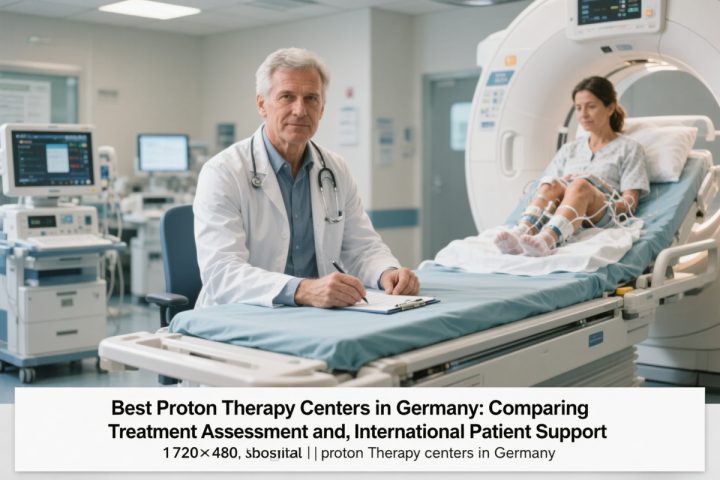
Understanding the Landscape of Advanced Radiation Oncology in Europe
For patients facing complex malignancies where precision is paramount, the choice of treatment facility can define the trajectory of recovery and long-term quality of life. Proton therapy centers in Germany have emerged as a global benchmark for this advanced form of radiation oncology, offering a unique blend of cutting-edge physics, rigorous medical standards, and comprehensive patient care protocols. Unlike traditional photon-based radiation, which deposits energy along its entire path through the body, proton beams are engineered to release their maximum energy at a precise depth before stopping, effectively sparing surrounding healthy tissue from unnecessary exposure. This distinction is particularly critical for treating tumors located near vital organs such as the brain, spinal cord, eyes, and heart, making the selection of the right facility an absolute priority.
The decision to seek treatment abroad often involves navigating a complex web of medical logistics, insurance considerations, and linguistic barriers. Germany stands out not merely for the technological sophistication of its facilities but for the structured integration of international patient support services within its hospital systems. When evaluating proton therapy centers in Germany, it is essential to look beyond the hardware specifications of the cyclotrons or synchrotrons installed on-site. The true value lies in the multidisciplinary tumor boards that assess every case, the seamless coordination between diagnostic imaging and beam delivery, and the dedicated infrastructure designed to accommodate international travelers who require extended stays during the treatment course.
This comprehensive guide is designed to provide a detailed comparison of the leading facilities across the country. We will explore how these institutions approach treatment assessment, the specific nuances of their international patient departments, and the practical realities of undergoing a multi-week therapeutic regimen in a foreign healthcare system. Whether you are a patient considering options for pediatric cancers, head and neck malignancies, or ocular tumors, understanding the operational differences between major German clinics is the first step toward making an informed, life-altering decision regarding your care.
Comparing Leading Facilities: Technology and Clinical Expertise
Germany hosts several world-class facilities dedicated exclusively or primarily to particle therapy, each with distinct historical backgrounds, technological configurations, and clinical focuses. While the fundamental physics of proton therapy remains consistent, the implementation varies significantly between institutions, influencing both the range of treatable conditions and the overall patient experience. The two most prominent hubs currently operating at full capacity are the Heidelberg Ion-Beam Therapy Center (HIT) and the University Hospital Munich (TUM). Both facilities represent the pinnacle of German engineering and medical research, yet they serve different patient demographics and offer varying levels of specialization.
The Heidelberg Ion-Beam Therapy Center, affiliated with the National Center for Tumor Diseases (NCT), is widely recognized as one of the oldest and most experienced proton centers in Europe. Its reputation is built upon decades of clinical data and a robust research program that continuously refines treatment protocols. HIT utilizes a dual-room setup, allowing for simultaneous treatments and increasing throughput without compromising the meticulous planning required for each patient. The center is particularly renowned for its expertise in treating rare childhood cancers and complex skull base tumors. For international patients, HIT offers a highly structured admission process where treatment assessment begins well before arrival, ensuring that all necessary imaging and documentation are reviewed by the German medical team prior to the patient stepping onto German soil.
In contrast, the University Hospital Munich represents a newer generation of particle therapy centers, integrating proton treatment directly into a massive university hospital environment. This proximity allows for immediate access to a wide array of surgical specialties, intensive care units, and emergency services, which can be a crucial safety net for patients with complex comorbidities. Munich’s facility features state-of-the-art gantries capable of delivering protons from multiple angles, enhancing the ability to conform the dose to irregularly shaped tumors. The clinical strength of Munich lies in its broad spectrum of adult oncology applications, including prostate cancer, lung cancer, and gastrointestinal malignancies. When comparing proton therapy centers in Germany, the choice often comes down to whether the patient prioritizes the specialized, research-driven environment of Heidelberg or the comprehensive, integrated hospital ecosystem of Munich.
Beyond these two giants, other facilities such as the Paul Scherrer Institute in Switzerland (often collaborating with German centers) and the newly established centers in Essen and Hamburg contribute to a competitive landscape. However, for the purpose of international patient support and volume, Heidelberg and Munich remain the primary destinations. It is important to note that the technology itself is only one component of the equation; the skill of the radiation oncologists, medical physicists, and dosimetrists is equally vital. These professionals undergo years of specialized training to master the complexities of proton beam planning, ensuring that the theoretical advantages of the technology are fully realized in clinical practice.
Technological Nuances: Gantry Design and Beam Delivery
The physical design of the treatment room plays a significant role in the versatility of the therapy offered. Modern proton therapy centers in Germany typically employ rotating gantries, which allow the proton beam to be delivered from any angle around the patient. This flexibility is essential for targeting deep-seated tumors while minimizing the entry point of the beam through healthy tissue. Some older facilities may utilize fixed-beam arrangements, which limit the angles of approach but can still be highly effective for specific anatomical locations. The latest installations in Germany feature pencil-beam scanning technology, a sophisticated method that paints the tumor cell by cell, rather than spraying a broad beam. This technique offers superior dose conformity and is particularly beneficial for moving targets, such as those in the lung or liver, where respiratory gating systems are employed to synchronize the beam with the patient’s breathing cycle.
When assessing a facility, international patients should inquire about the specific type of beam delivery system in use. While the difference between passive scattering and active scanning may seem technical, it has profound implications for the precision of the treatment and the potential side effects. Active scanning, now standard in the newest German centers, allows for intensity-modulated proton therapy (IMPT), which can sculpt the dose distribution with extreme accuracy. This capability is increasingly important for re-treating patients who have previously undergone radiation therapy, as it minimizes the cumulative dose to healthy tissues. The commitment to maintaining up-to-date technology is a hallmark of the top-tier proton therapy centers in Germany, ensuring that patients receive the most current and effective treatment available.
The Critical Role of Treatment Assessment and Multidisciplinary Review
One of the most significant advantages of seeking treatment at a major German institution is the rigorous approach to treatment assessment. Before a single proton beam is fired, every patient undergoes a comprehensive evaluation by a multidisciplinary tumor board. This team typically includes radiation oncologists, medical physicists, surgeons, radiologists, and pathologists who review the patient’s complete medical history, imaging studies, and genetic profiles. This collaborative approach ensures that proton therapy is not just a default option but the most appropriate intervention based on the specific characteristics of the tumor and the patient’s overall health status.
The assessment phase for international patients often begins remotely. Many proton therapy centers in Germany have dedicated departments that accept electronic medical records and imaging files via secure servers. A preliminary review is conducted to determine if the patient is a suitable candidate for proton therapy and to identify any additional tests that may need to be performed prior to arrival. This pre-assessment is crucial for streamlining the patient journey, reducing the time spent in the hospital waiting for diagnostics, and ensuring that the treatment plan is ready to be implemented immediately upon the patient’s arrival. The goal is to create a seamless transition from diagnosis to treatment, minimizing anxiety and logistical friction for the family.
- Initial Data Submission: Patients submit MRI, CT, PET scans, and pathology reports through a secure portal managed by the international patient office.
- Preliminary Medical Review: A senior physician reviews the case to confirm eligibility and request any missing information or supplementary imaging.
- Tumor Board Conference: The case is presented to the multidisciplinary team for a consensus on the treatment strategy and feasibility.
- Detailed Planning Simulation: Once the plan is approved, a simulation scan is performed to map the exact coordinates for the proton beam delivery.
- Final Approval and Scheduling: The patient receives a confirmed treatment schedule and instructions for the start date.
This structured workflow highlights the systematic nature of German healthcare. For patients traveling from abroad, the clarity of this process provides a sense of security and control. It also underscores the importance of bringing accurate and up-to-date medical records. Incomplete or outdated information can delay the assessment process, potentially pushing back the start of treatment. Therefore, working closely with the international patient coordinator to ensure all documents are translated and formatted correctly is a critical step in the preparation phase.
Eligibility Criteria and Patient Selection
Not every cancer patient requires or benefits from proton therapy. The decision to proceed is based on strict medical criteria that weigh the potential benefits against the risks and costs. Proton therapy centers in Germany prioritize cases where the sparing of healthy tissue is likely to result in a significant reduction in acute or late-side effects. This includes pediatric patients, whose developing bodies are more susceptible to radiation-induced secondary cancers and growth disturbances, as well as adults with tumors in sensitive areas like the optic nerves, brainstem, or cardiac region.
Conversely, for certain types of early-stage cancers or those located in areas where photon therapy is already highly effective and low-risk, proton therapy may not be recommended. The multidisciplinary teams are committed to evidence-based medicine and will not recommend a procedure simply because it is available. They will often discuss alternative treatment modalities, such as surgery or conventional radiation, if the data suggests that proton therapy offers no significant advantage for a specific condition. This honest and transparent approach to patient selection builds trust and ensures that resources are allocated to those who will derive the greatest clinical benefit.
Navigating International Patient Support Services
For patients traveling from outside the European Union, the logistical challenges of receiving medical care in a foreign country can be daunting. Language barriers, unfamiliar legal systems, and the complexity of the German healthcare infrastructure present significant hurdles. To address these challenges, the leading proton therapy centers in Germany have developed robust international patient support departments that act as a bridge between the patient and the medical team. These departments are staffed by multilingual coordinators who specialize in guiding international patients through every stage of the journey, from the initial inquiry to post-treatment follow-up.
- Linguistic Assistance: Professional interpreters are available for all major languages, ensuring that medical consultations are clear and accurate. Written materials, consent forms, and discharge summaries are provided in the patient’s native language.
- Logistical Coordination: Coordinators assist with visa applications, travel arrangements, and accommodation bookings. They often partner with hotels and apartment complexes that cater to medical tourists, providing safe and comfortable lodging close to the clinic.
- Financial Guidance: While costs vary, the international offices provide detailed cost estimates and guidance on payment methods. They can also liaise with insurance providers to verify coverage and handle necessary billing documentation.
- Continuity of Care: After the treatment concludes, the support team helps arrange follow-up appointments, either in Germany or with local specialists in the patient’s home country, ensuring that the care plan continues seamlessly.
The level of support provided is often a deciding factor for families choosing between facilities. A dedicated case manager acts as a single point of contact, answering questions and resolving issues as they arise. This personalized attention is invaluable during a stressful time, allowing the patient and their family to focus entirely on the treatment and recovery process rather than administrative details. The presence of a well-organized international department is a strong indicator of a facility’s commitment to serving a global patient base.
Accommodation and Lifestyle During Treatment
Proton therapy courses typically last several weeks, requiring patients to stay in the vicinity of the treatment center for the duration of the regimen. Most proton therapy centers in Germany offer flexible scheduling, with daily sessions lasting only a few hours, leaving ample time for rest and recovery. The hospitals often maintain lists of recommended accommodations, ranging from luxury hotels to long-stay apartments equipped with kitchens and laundry facilities. These housing options are chosen for their proximity to the clinic, accessibility for patients with mobility issues, and quiet environments conducive to healing.
Some centers even offer “patient houses” or partnerships with specific residential complexes designed specifically for medical guests. These facilities often provide additional amenities such as meal services, transportation shuttles to the hospital, and social activities to help patients connect with others undergoing similar treatments. The availability of such supportive infrastructure makes the experience of receiving treatment abroad much more manageable and less isolating. Families can also take advantage of the cultural offerings in cities like Heidelberg and Munich, turning the treatment period into a shared family experience while ensuring that all medical needs are met.
Cost Considerations and Insurance Coverage
The financial aspect of seeking treatment abroad is a primary concern for many patients. Proton therapy centers in Germany generally operate on a fee-for-service basis for international patients, meaning that costs are typically paid out-of-pocket unless covered by private insurance or government agreements. The total cost of a proton therapy course can vary significantly depending on the facility, the complexity of the tumor, and the length of the treatment. On average, a full course of treatment in Germany can range from €50,000 to €80,000, though this figure is subject to change based on individual clinical requirements.
| Cost Component | Description | Estimated Range (EUR) |
|---|---|---|
| Initial Assessment & Planning | Includes consultation, imaging review, and treatment planning by the medical team. | €3,000 – €6,000 |
| Treatment Sessions | Cost per fraction (daily session) multiplied by the total number of fractions (typically 20-40). | €40,000 – €70,000 |
| Support Services | Interpreter services, nursing care, and medication management. | €2,000 – €4,000 |
| Follow-up Visits | Post-treatment check-ups and monitoring during the stay. | €1,000 – €2,000 |
| Total Estimated Cost | Excluding accommodation and travel. | €46,000 – €82,000 |
It is important to note that these figures are estimates and should be confirmed with the specific facility. Some private insurance plans worldwide cover international medical treatment, including proton therapy, but pre-authorization is almost always required. Patients should contact their insurance provider early in the process to understand their coverage limits and the documentation needed for reimbursement. Additionally, some German hospitals offer financing options or payment plans to assist patients in managing the upfront costs. Transparency regarding pricing is a key feature of the international patient departments, which strive to provide clear, itemized quotes to avoid unexpected expenses.
Recovery Protocols and Long-Term Follow-Up
The end of the proton therapy course marks a new phase in the patient’s journey: recovery and long-term monitoring. Proton therapy centers in Germany emphasize the importance of a structured follow-up plan to monitor for recurrence and manage any late effects of the treatment. Because proton therapy spares healthy tissue, the recovery profile is often more favorable than with conventional radiation, but regular surveillance remains essential. The international patient coordinators play a vital role in facilitating this transition, helping to arrange remote consultations with local doctors in the patient’s home country and providing detailed medical reports in English or the patient’s native language.
Patients are typically advised to return to their home country shortly after the completion of treatment, provided they are medically stable. The German medical team will provide a comprehensive discharge summary that includes the total dose delivered, the treatment fields, and specific recommendations for future care. This document serves as a crucial reference for any subsequent medical interactions. For patients who require further interventions, such as surgery or chemotherapy, the German team remains available for remote consultation, ensuring that the treatment plan remains cohesive regardless of where the patient resides. The ultimate goal is to empower the patient with the knowledge and resources needed to maintain their health long after they have left Germany.
Frequently Asked Questions
How do I know if I am eligible for proton therapy?
Eligibility is determined by a multidisciplinary tumor board after a thorough review of your medical history and imaging. Generally, patients with tumors located near critical structures (like the brain, spine, or heart) or pediatric patients are ideal candidates. You can begin the process by submitting your medical records to the international patient department of a proton therapy center in Germany for a preliminary assessment.
What is the typical duration of a proton therapy course?
A standard course of proton therapy usually lasts between three to six weeks, depending on the type and stage of the cancer. Daily treatment sessions typically occur Monday through Friday, with each visit lasting approximately one to two hours. The exact timeline is customized for each patient during the treatment planning phase.
Can my insurance cover treatment in Germany?
Many private international insurance plans do cover proton therapy in Germany, but pre-approval is mandatory. Public health insurance in Germany generally does not cover international patients unless there is a specific bilateral agreement. It is crucial to contact your insurer early to verify coverage limits and required documentation.
Do I need to speak German to receive treatment?
No. All leading proton therapy centers in Germany have dedicated international patient departments with multilingual staff. Professional interpreters are available for all consultations, and medical documents can be translated into your preferred language to ensure clear communication throughout your stay.
Is accommodation provided near the hospital?
Hospitals do not typically provide free accommodation, but their international patient offices can assist in booking hotels or long-stay apartments nearby. They often have partnerships with facilities that cater to medical tourists, offering convenient transport and amenities tailored to patients’ needs.