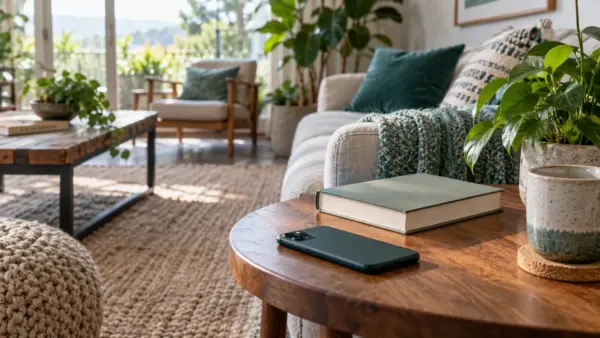

A calm home does not have to resemble a showroom. It needs to support the people who live there: a place to set things down, enough light for a task, a workable route through the room, and somewhere comfortable to pause.
Start with a repeated irritation rather than a decorating style. If mornings involve searching for keys, a tray may help more than new wall art. If the evening feels noisy, a household agreement may matter more than matching furniture.
Choose one area with a clear purpose
Pick a small space you use daily, such as an entry surface, bedside table, or kitchen preparation area. Decide what the area needs to do. Then remove or relocate items that prevent that function.
For a bedside table, you may need a lamp, water, glasses, and necessary medical equipment. It does not need to hold paperwork from several months. For an entry area, prioritize the items required to leave home.
Set a short stopping point so the task does not expand into an exhausting whole-house project. Finish one useful area and use it for several days before deciding what else needs attention.
Reduce searching with obvious storage
Place frequently used items near where they are used. Keep cleaning supplies in an appropriate safe location near the relevant task, and put everyday clothing where it is accessible. Consider children, pets, mobility needs, and hazardous products when choosing storage.
Containers should make retrieval easier, not simply hide a problem. A labeled open basket may work better than a tightly packed drawer. If a system requires several steps to put one object away, it may be difficult to maintain.
Our guide to everyday organization can help you choose simple systems. Organization is useful when it supports daily life, not when it produces a perfect photograph.
Adjust lighting for the activity
Use brighter task lighting where you read, cook, or work, and softer lighting where you prefer to relax. Check for glare on screens or surfaces. A small change in lamp position may be enough.
In the evening, consider reducing unnecessary bright light as you prepare for sleep. NHLBI includes managing light among its healthy sleep recommendations. You can keep enough illumination for safety while making the room less stimulating.
If daylight is limited, focus on comfortable, functional lighting rather than assuming the room cannot feel welcoming. Choose what helps you see and move safely within your available space and budget.
Give sound some attention
Notice which sounds are useful and which create friction. A television playing in an empty room, overlapping videos, or constant notification sounds may be easy to reduce. Other noise, such as traffic or neighbors, may be less controllable.
Discuss shared expectations. One person may enjoy background music while another needs quiet to read. Headphones, agreed quiet periods, or using different areas can help when available.
Avoid adding sound simply because a room is supposed to feel relaxing. Silence, music, or ordinary household activity can each be comfortable depending on the person. The aim is a workable environment for the people present.
Prioritize air quality over fragrance
A fresh smell is not the same as clean air. EPA guidance emphasizes addressing pollution sources and using ventilation appropriately. Identify obvious issues such as smoke, moisture, or products that irritate you, rather than covering odors with stronger scents.
Follow product labels, avoid mixing cleaning chemicals, and keep supplies stored safely. Ventilate when outdoor conditions and the building setup make it appropriate. During smoke or poor outdoor air quality, opening windows may not be helpful.
Persistent dampness, mold, or building problems may need landlord, maintenance, or professional attention. Decorative changes cannot solve a moisture problem. If a scent causes irritation or headaches, remove it rather than assuming you must become accustomed to it.
Create one place for a restorative activity
Choose a spot for something you actually enjoy: reading, drawing, listening to music, or talking with someone. Put the necessary item within reach. A library book beside a comfortable chair is enough to make the activity more available.
Keep expectations modest in a shared or small home. The space may be a chair used for different purposes at different times. You do not need a dedicated wellness room.
For affordable options, see self-care ideas that cost little. The important feature is an invitation to an activity you value, not a collection of products marketed as calming.
Agree on a small reset
Choose one routine that keeps the useful change available. Clear the preparation surface after dinner, return shared items to a basket, or check the entry area before bed. Keep the reset brief and distribute it fairly.
Do not assume the person who notices clutter should manage everyone else’s belongings. Discuss ownership and practical responsibilities. If standards differ, agree on shared functional goals such as clear walkways and usable counters.
Our work-life balance guide includes ideas for sharing the planning behind household tasks. A home feels more supportive when maintaining it does not depend on one person silently carrying the whole system.
Frequently Asked Questions
No. Begin with one area whose function is repeatedly blocked. Keep belongings that are useful or meaningful, and judge the change by whether daily activities become easier.
No. Fragrance is optional and may irritate some people. Comfort, safe lighting, useful storage, and attention to air-quality problems are more practical starting points.
Choose flexible arrangements and discuss needs directly. A shared chair, quiet period, or small basket for personal belongings may be more realistic than creating a separate room or permanent zone.