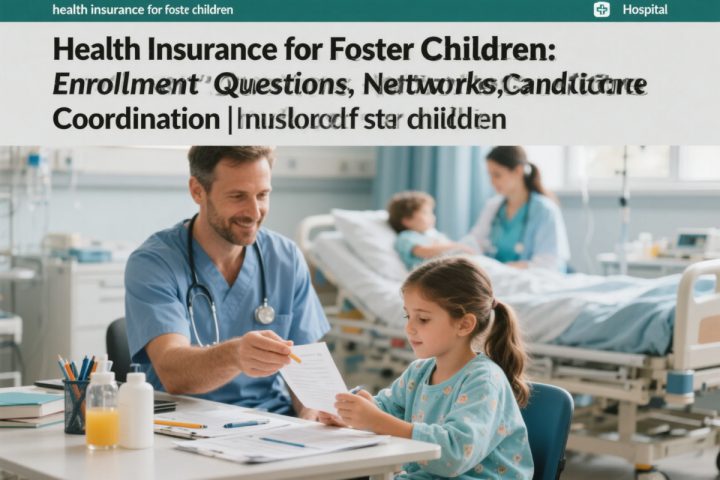
Navigating the Complexities of Health Insurance for Foster Children
The journey to securing comprehensive health insurance for foster children is often a critical yet misunderstood component of their overall well-being. For caseworkers, foster parents, and biological families alike, understanding the nuances of enrollment, network access, and care coordination can feel like navigating a labyrinth without a map. Unlike standard private insurance plans or even traditional Medicaid eligibility, the system governing coverage for youth in foster care involves a unique intersection of federal mandates, state-specific protocols, and the immediate medical needs of vulnerable minors.
When a child enters the foster care system, their health status often requires immediate and sustained attention. These children frequently present with complex medical histories, including unmet dental needs, developmental delays, and mental health challenges that demand specialized hospital services. The primary goal of any health insurance for foster children program is not merely to provide a safety net but to ensure seamless continuity of care as these young individuals transition between homes, schools, and medical providers. Without this clarity, gaps in coverage can lead to delayed treatments, emergency room overuse, and significant long-term health disparities.
This article serves as a comprehensive guide for those involved in the care of foster youth. We will explore the specific mechanisms by which health insurance for foster children is administered, typically through Medicaid’s Title XIX and Title XXI provisions. We will delve into the practical questions surrounding enrollment timelines, the importance of selecting appropriate provider networks within hospital systems, and the vital role of care coordination teams in bridging the gap between administrative policy and clinical reality. By demystifying these processes, we aim to empower stakeholders to advocate effectively for the medical rights and needs of every child in care.
Understanding Eligibility and Enrollment Mechanisms
The foundation of health insurance for foster children lies in the automatic eligibility granted under federal law. Under the Social Security Act, all children who are placed in foster care by a state agency are automatically eligible for Medicaid benefits, regardless of their family’s income level or assets. This provision is designed to remove financial barriers that might otherwise prevent a child from accessing necessary medical services during a time of instability. Consequently, most foster children do not need to undergo the rigorous financial means-testing required for other Medicaid applicants; their placement status itself serves as the primary qualification.
However, while eligibility is automatic, the enrollment process can sometimes be fraught with administrative delays. In many jurisdictions, the child welfare agency is responsible for initiating the application on behalf of the child. Yet, discrepancies in data sharing between the Department of Child Services and the state Medicaid office can result in lags where a child is technically eligible but lacks an active card or identification number. These gaps can be particularly dangerous when a child requires urgent hospital admission or specialist consultation. Therefore, proactive verification of health insurance for foster children status immediately upon placement is a non-negotiable step for caseworkers and foster parents.
The scope of coverage provided through these automatic enrollments is generally robust. It includes inpatient and outpatient hospital services, physician visits, prescription medications, laboratory tests, and preventive care. Furthermore, it encompasses essential behavioral health services, which are disproportionately needed by the foster population. Despite the breadth of coverage, the complexity arises when a child moves across state lines. Since Medicaid is administered at the state level, a change in residency can trigger a suspension of benefits until the new state verifies eligibility and re-enrolls the child. Understanding these jurisdictional boundaries is crucial for maintaining uninterrupted health insurance for foster children coverage.
The Role of the Caseworker in Initial Enrollment
The caseworker acts as the primary liaison between the child’s medical needs and the insurance infrastructure. Their responsibility extends beyond simply filing paperwork; they must ensure that the correct plan is selected and that the child’s medical history is accurately transferred to the new insurer. When a child first enters the system, the caseworker must coordinate with the local hospital or clinic to confirm that the health insurance for foster children application has been successfully processed. If there are any outstanding debts or prior authorizations from previous placements, the caseworker must navigate these issues to prevent the child from being denied care.
In addition to administrative duties, the caseworker plays a pivotal role in educating foster parents about how to use the insurance. Many foster parents may be unfamiliar with the specific terminology of Medicaid managed care plans. They need to know how to identify in-network providers, what constitutes an emergency versus an urgent care visit, and how to handle referrals for specialty services. A lack of this knowledge can lead to unexpected out-of-pocket costs or claim denials, which undermines the purpose of having health insurance for foster children. Training programs for foster families should therefore include detailed modules on navigating the insurance landscape.
Decoding Provider Networks and Hospital Access
One of the most significant challenges in managing health insurance for foster children is ensuring access to a robust provider network. While Medicaid guarantees coverage, the actual availability of doctors, specialists, and hospitals willing to accept that coverage varies widely by region. In many urban areas, large hospital systems have dedicated clinics for foster youth, but in rural communities, the options may be severely limited. Foster families often find themselves traveling long distances to reach an in-network pediatrician or specialist, which can be a logistical nightmare and a barrier to consistent care.
Hospitals play a central role in this ecosystem, often serving as the primary point of contact for acute and chronic conditions. However, not all hospitals participate in every Medicaid managed care organization (MCO). If a foster child is enrolled in a specific MCO, they may be restricted to a list of contracted facilities. If a child requires a procedure at a hospital outside this network, the claim may be denied unless a prior authorization is obtained. This restriction highlights the importance of verifying network status before scheduling non-emergency appointments. Families must be vigilant about whether their chosen hospital is part of the health insurance for foster children plan’s approved network to avoid financial complications.
The concept of “network adequacy” is particularly relevant here. Federal regulations require states to ensure that there are enough providers within the network to meet the needs of enrollees without excessive travel times. However, enforcement and monitoring vary. When a hospital system does not meet these standards, children may face long wait times or be forced to seek care elsewhere. For children with complex needs, such as those requiring cardiac surgery or specialized psychiatric hospitalization, the network restrictions can be life-altering. Advocates must push for policies that expand the network of health insurance for foster children to include high-quality, specialized care centers.
Specialized Care and Out-of-Network Exceptions
There are instances where the designated network for health insurance for foster children does not include the necessary expertise for a child’s condition. For example, a child needing advanced neurosurgery or a rare genetic disorder treatment may only be available at a major academic medical center that is out-of-network. In these cases, the insurance plan is generally required to grant an exception to cover out-of-network services. This process, known as a “single case agreement” or “out-of-network authorization,” requires strong advocacy from the treating physician and the child’s guardian.
Families must understand the distinction between emergency and non-emergency out-of-network care. In a true emergency, where the child’s life is at risk, hospitals are legally obligated to stabilize the patient regardless of network status. However, for planned procedures, the burden of proof lies with the family to demonstrate that no in-network provider can deliver the required care. This often involves gathering medical records, obtaining letters of support from current physicians, and submitting formal requests to the insurance carrier. Navigating this process can be daunting, but it is essential for ensuring that health insurance for foster children translates into actual access to life-saving treatments.
| Aspect of Coverage | In-Network Scenario | Out-of-Network Scenario |
|---|---|---|
| Cost to Family | Typically $0 copay for preventive and essential services under Medicaid. | May require prior authorization; potential for higher costs if not approved. |
| Provider Availability | Varies by region; may have shorter wait times for general pediatrics. | Limited availability; often reserved for specialized or complex cases. |
| Authorization Needed | Usually not required for routine visits and preventive care. | Mandatory for planned procedures; requires medical justification. |
| Emergency Care | Covered fully regardless of network status. | Covered fully regardless of network status (stabilization phase). |
| Coordination Required | Standard referral process through primary care provider. | Complex coordination between hospital, insurer, and caseworker. |
The Critical Role of Care Coordination
Care coordination is the backbone of effective health insurance for foster children management. Given the fragmented nature of the foster care system, where a child may move between multiple homes, attend different schools, and interact with various agencies, a coordinated approach is essential to prevent medical errors and duplication of services. Care coordinators act as the central hub, communicating between the child’s pediatrician, the hospital specialists, the mental health team, and the child welfare caseworker. Their primary function is to ensure that all parties are working toward a unified health plan.
In the context of hospital admissions, care coordination becomes even more vital. When a foster child is admitted to the hospital, the discharge planning process must account for their living situation. Who will administer medication? Is there transportation to follow-up appointments? Does the foster home have the capacity to manage post-operative care? Without a dedicated coordinator, these details are often overlooked, leading to readmissions or complications. Effective health insurance for foster children programs integrate care coordination directly into the hospital stay, ensuring that the transition from acute care back to the community is smooth and supported.
Mental health care presents another layer of complexity where coordination is paramount. Foster children have higher rates of trauma-related disorders and behavioral health issues than the general population. Integrating mental health services with physical health care is a best practice, yet silos often exist between the two. A care coordinator ensures that a child receiving treatment for asthma also receives support for anxiety or PTSD. This holistic view maximizes the value of health insurance for foster children by addressing the root causes of health decline rather than just treating symptoms. It transforms the insurance from a payment mechanism into a tool for comprehensive wellness.
Strategies for Effective Communication
To achieve true care coordination, stakeholders must establish clear communication channels. Regular multidisciplinary team meetings involving the foster parent, caseworker, primary care physician, and insurance representative can help align goals and resolve conflicts quickly. Digital health records and shared portals are increasingly being used to facilitate this exchange of information, allowing real-time updates on medication changes, test results, and appointment schedules. These tools are essential for maintaining the integrity of health insurance for foster children claims and ensuring that providers are aware of the full scope of the child’s needs.
Furthermore, fostering a culture of transparency is key. Families should be encouraged to speak up if they notice discrepancies in billing or if a service is not being covered as expected. Caseworkers must be trained to recognize signs of care fragmentation and intervene early. By prioritizing communication, the system can better support the unique trajectory of each child. The ultimate measure of success in health insurance for foster children is not just the number of claims paid, but the improvement in the child’s overall health outcomes and quality of life.
Common Challenges and Practical Solutions
Despite the robust framework designed to protect foster youth, several persistent challenges hinder the optimal delivery of health insurance for foster children. One of the most common issues is the turnover of foster parents. When a child moves to a new home, the new caregiver must learn the ropes of the insurance system, which can take time. During this learning curve, there is a risk of missed appointments or lapses in medication adherence. To mitigate this, states and agencies are implementing standardized orientation packets and digital resources that can be instantly accessed by new foster families.
Another significant hurdle is the stigma associated with Medicaid. Some healthcare providers may be hesitant to accept Medicaid patients due to lower reimbursement rates compared to private insurance. This can limit the pool of available specialists for foster children. Addressing this requires ongoing advocacy and policy reform to improve reimbursement rates and incentivize providers to join Medicaid networks. Additionally, some families face difficulties in navigating the complexities of dual eligibility, where a child may qualify for both Medicaid and Supplemental Security Income (SSI), adding layers of administrative complexity to their health insurance for foster children coverage.
Solutions to these challenges often involve leveraging technology and community partnerships. Telehealth services have emerged as a powerful tool to overcome geographic barriers, allowing children in remote areas to consult with specialists without leaving their local hospital or clinic. Community-based organizations can also provide navigational support, helping families fill out forms, schedule appointments, and understand their rights. By combining technological innovation with human support, the system can become more resilient and responsive to the needs of health insurance for foster children.
The Impact of Transition to Adulthood
A critical period for health insurance for foster children occurs when they age out of the system. At 18 years old, many youth lose their automatic Medicaid eligibility, forcing them to navigate the adult healthcare market alone. This transition is often abrupt and poorly supported, leading to a sharp decline in health outcomes. Recognizing this, the Fostering Connections to Success and Increasing Adoptions Act extended Medicaid coverage to age 21 for youth who were in foster care. However, awareness of this extension remains low among aging-out youth and their advocates.
Preparing for this transition requires a proactive approach starting years before the child turns 18. Care plans must include a detailed review of insurance options, including the possibility of purchasing private plans or enrolling in state-specific bridge programs. Hospitals and social workers must collaborate to ensure that the handoff to adult care is seamless. This includes transferring medical records, establishing relationships with adult primary care providers, and educating the young adult about how to manage their own health insurance for foster children benefits. Failure to address this transition can result in a loss of critical care, undoing years of progress in the child’s health journey.
Financial Implications and Cost Management
While the majority of health insurance for foster children is funded through Medicaid, there are still financial considerations that families and agencies must manage. Although out-of-pocket costs are minimal for the child, the broader system faces budgetary pressures. States must balance the cost of providing comprehensive care with the available funding streams. This can sometimes lead to restrictions on certain types of services or longer wait times for elective procedures. Understanding the financial dynamics helps stakeholders advocate for adequate resources and realistic expectations regarding care availability.
For foster parents, the financial aspect often revolves around understanding what is covered and what might require additional funding. While basic medical care is covered, some items like dental braces, vision aids, or specialized equipment may have caps or require separate approval. It is important for families to familiarize themselves with these limitations early on. Proactive planning can prevent situations where a child needs a specific item that is not immediately covered, potentially delaying treatment. Clear communication with the insurance administrator can clarify these boundaries and ensure that health insurance for foster children is utilized to its fullest potential.
Additionally, the cost of emergency care can be a significant drain on resources if preventative measures are neglected. Ensuring regular check-ups and timely interventions can reduce the likelihood of expensive hospitalizations. This preventive approach not only improves health outcomes but also optimizes the financial efficiency of the health insurance for foster children program. By investing in primary care and community-based services, the system can avoid the high costs associated with crisis intervention and emergency department visits.
Building a Supportive Ecosystem for Foster Youth
The ultimate success of health insurance for foster children initiatives depends on building a supportive ecosystem that encompasses all stakeholders. This includes government agencies, healthcare providers, foster families, and the children themselves. Each group has a unique perspective and set of responsibilities that contribute to the overall health of the foster population. Collaboration is key; when these groups work in harmony, the barriers to care diminish, and the quality of life for foster children improves significantly.
Educational initiatives play a crucial role in this ecosystem. Workshops, webinars, and training sessions can equip foster parents and caseworkers with the knowledge needed to navigate the insurance system effectively. By empowering families with information, we reduce the anxiety and confusion that often accompany medical emergencies. Furthermore, engaging children in their own healthcare decisions, age-appropriately, fosters a sense of autonomy and responsibility. This empowerment is a vital component of long-term health literacy and self-advocacy.
Finally, continuous feedback loops are essential for refining the system. Surveys, focus groups, and data analysis can reveal gaps in service delivery and inform policy adjustments. Listening to the voices of foster youth and their caregivers ensures that the health insurance for foster children program remains responsive to real-world needs. As the landscape of healthcare evolves, so too must our strategies for supporting these vulnerable children. Through dedication and collaboration, we can create a future where every foster child has access to the highest quality of care.
- Verify Eligibility Immediately: Confirm the child’s Medicaid status upon placement to prevent coverage gaps.
- Select In-Network Providers: Choose hospitals and doctors within the approved network to minimize costs and administrative hurdles.
- Establish a Care Coordinator: Assign a dedicated professional to manage communications between all medical and social service providers.
- Prepare for Transitions: Plan ahead for moves between homes, schools, and eventual aging out of the system.
- Advocate for Network Expansion: Support policies that increase the availability of specialists and hospitals accepting Medicaid.
- Preventive Care: Routine check-ups, immunizations, and screenings to catch issues early.
- Behavioral Health: Therapy, counseling, and psychiatric services tailored to trauma and mental health needs.
- Dental and Vision: Comprehensive oral and eye care, often requiring separate authorization.
- Prescription Medications: Access to necessary drugs for chronic and acute conditions.
- Emergency Services: Immediate stabilization and treatment for urgent medical crises.
Frequently Asked Questions
How quickly can I enroll a foster child in health insurance?
Eligibility for health insurance for foster children is automatic upon placement in the foster care system. However, the processing time for the actual issuance of the insurance card can vary by state, typically ranging from a few days to a couple of weeks. It is crucial to verify the status immediately after placement to ensure there are no gaps in coverage, especially if the child requires urgent medical attention.
Can foster children choose their own doctor?
Generally, foster children are enrolled in a Medicaid Managed Care Organization (MCO) which provides a list of in-network providers. While they cannot always choose any doctor, families can select from the available network of pediatricians and specialists. If a specific doctor is out-of-network but necessary for the child’s care, a request for an exception can be made, though it requires documentation and approval.
What happens to the insurance if the child moves to a new state?
Medicaid is state-administered, so moving to a new state usually requires re-enrollment in the new state’s Medicaid program. The child’s eligibility remains intact due to their foster care status, but the administrative process must be repeated. It is important to notify the caseworker of the move immediately to initiate this transfer and avoid interruption of services.
Does health insurance for foster children cover mental health services?
Yes, comprehensive health insurance for foster children under Medicaid covers a wide range of mental health services, including therapy, psychiatric evaluations, and inpatient psychiatric care. Behavioral health is considered an essential health benefit, and states are required to provide these services to ensure the holistic well-being of foster youth.
Are there any out-of-pocket costs for foster children?
Most foster children enrolled in Medicaid have no premiums, deductibles, or copayments for covered services. However, there may be nominal fees for certain services depending on the state’s specific Medicaid rules, though these are often waived for children in foster care. Families should always confirm with their caseworker or insurance provider to understand any potential costs.