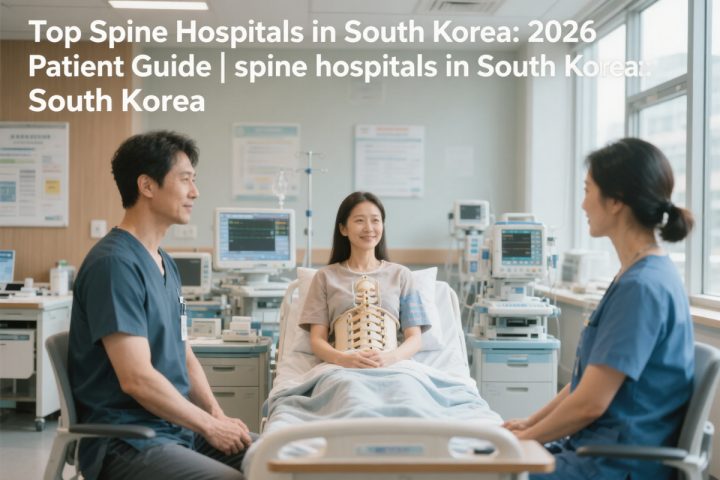
Introduction to World-Class Care: Navigating Spine Hospitals in South Korea
For patients facing complex spinal conditions, the decision to seek treatment abroad often hinges on finding a facility that combines advanced surgical technology with exceptional clinical expertise. spine hospitals in South Korea have emerged as a premier global destination for orthopedic and neurosurgical care, attracting international patients who seek precision medicine and minimally invasive solutions. The nation’s medical infrastructure is renowned for its rapid adoption of robotic-assisted surgery, 3D imaging, and sophisticated rehabilitation protocols that are often years ahead of standard practices in other regions.
The landscape of spine hospitals in South Korea is characterized by a high concentration of specialized centers dedicated exclusively to musculoskeletal disorders. These institutions do not merely treat symptoms; they offer comprehensive diagnostic pathways and personalized treatment plans that address the root cause of chronic pain, herniated discs, scoliosis, and degenerative diseases. With a reputation built on rigorous training standards and state-of-the-art facilities, these hospitals provide a compelling alternative for those who may have exhausted local treatment options or require highly specialized procedures not available elsewhere.
This guide serves as an essential resource for international patients considering this medical journey. We will explore the leading institutions, the specific technological advantages they offer, the typical patient journey from consultation to recovery, and the practical considerations regarding costs and logistics. Understanding the unique strengths of spine hospitals in South Korea allows patients to make informed decisions about their health, ensuring they receive the highest standard of care in a safe and supportive environment.
Why International Patients Choose South Korea for Spinal Surgery
The surge in medical tourism to South Korea is driven by a convergence of factors that prioritize patient outcomes, safety, and efficiency. When evaluating spine hospitals in South Korea, one of the most significant draws is the integration of cutting-edge robotics into surgical procedures. Facilities frequently utilize systems like the Mazor X and ROSA Spine, which allow surgeons to navigate the complex anatomy of the spine with sub-millimeter precision. This level of accuracy significantly reduces the risk of complications, minimizes tissue damage, and accelerates post-operative recovery times compared to traditional open surgeries.
Beyond technology, the expertise of the medical professionals in these institutions is a critical factor. Surgeons at top-tier spine hospitals in South Korea often undergo extensive fellowships and maintain high volumes of complex cases, ensuring they possess refined skills in both anterior and posterior approaches. The collaborative nature of care within these hospitals involves multidisciplinary teams comprising neurosurgeons, orthopedic surgeons, radiologists, and physical therapists working in unison to optimize patient results. This holistic approach ensures that every aspect of the patient’s condition is addressed comprehensively.
Patient-centric care models further distinguish these facilities. Many hospitals have dedicated international patient departments that handle everything from visa assistance and airport transfers to translation services and accommodation arrangements. This seamless support system alleviates the logistical burdens often associated with traveling for major surgery. Furthermore, the adherence to strict infection control protocols and the availability of modern amenities create a healing environment that is conducive to recovery. For many, the combination of world-class medical capability and compassionate, organized service makes spine hospitals in South Korea a superior choice for spinal interventions.
Leading Institutions: A Review of Top-Tier Spine Centers
Identifying the right facility is crucial for a successful outcome. Several institutions have established themselves as leaders in the field, offering distinct strengths in various areas of spinal care. While rankings can vary based on specific criteria, certain names consistently appear at the forefront of excellence in spine hospitals in South Korea.
Samsung Medical Center in Seoul is widely recognized for its advanced research capabilities and the sheer scale of its operations. Its Department of Orthopedic Surgery boasts a dedicated spine division equipped with the latest robotic systems. The hospital is particularly noted for handling complex revision surgeries and deformity corrections where previous treatments have failed. Their commitment to innovation means they are often among the first to pilot new surgical techniques and technologies.
Seoul National University Hospital stands out as a public institution that maintains an exceptionally high standard of academic rigor. It serves as a referral center for the most difficult cases across the country. The faculty here includes some of the most respected names in Korean neurosurgery and orthopedics. Patients seeking second opinions or highly specialized treatments for rare spinal conditions often find the resources and expertise at spine hospitals in South Korea like SNUH unmatched.
Asan Medical Center is another powerhouse, known for its integrated approach to patient care and its massive volume of international visitors. The hospital features a specialized international clinic that streamlines the admission process for foreign patients. Their spine department excels in minimally invasive procedures, including endoscopic discectomies and laser therapies, which appeal to patients looking for quicker return-to-work timelines. The consistency of care and the robust support network make it a preferred choice for many.
Catholic University St. Vincent’s Hospital has also gained prominence for its focus on spinal deformity and degenerative diseases. The team there is renowned for its meticulous planning using 3D printing technology to create patient-specific models before surgery. This preparation allows for greater predictability in outcomes. Similarly, Yonsei Severance Hospital offers a historic legacy of excellence combined with modern advancements, providing a wide range of treatments from conservative management to complex fusion surgeries.
Comparative Analysis of Key Features
To help patients understand the nuances between these top-tier facilities, it is useful to compare their primary specialties and technological offerings. The following table outlines key differentiators found among the leading spine hospitals in South Korea.
| Hospital Name | Primary Specialization | Key Technology | International Patient Support |
|---|---|---|---|
| Samsung Medical Center | Complex Revision Surgeries & Deformity Correction | Mazor X Robotics, Advanced Navigation | Dedicated Global Service Center |
| Seoul National University Hospital | Rare Conditions & Academic Research Cases | 3D Printing Models, Intraoperative MRI | Specialized International Clinic |
| Asan Medical Center | Minimally Invasive Procedures & Endoscopy | ROSA Spine Robot, Endoscopic Systems | Comprehensive Concierge Services |
| St. Vincent’s Hospital | Spinal Deformity & Pre-operative Planning | Patient-Specific 3D Printed Implants | Full Translation & Logistics Team |
| Yonsei Severance Hospital | Comprehensive Degenerative Disease Management | Navigated Instrumentation, Laser Therapy | Multi-language Staff & Hotel Partnerships |
Advanced Surgical Techniques and Technological Innovations
The reputation of spine hospitals in South Korea is heavily bolstered by their aggressive adoption of advanced surgical techniques. One of the most transformative innovations is robotic-assisted surgery. Unlike traditional methods that rely solely on the surgeon’s visual estimation and manual dexterity, robotic systems provide real-time 3D visualization and haptic feedback. This allows for the placement of pedicle screws with unprecedented accuracy, reducing the risk of nerve injury and the need for re-operation. In spine hospitals in South Korea, robots are used for almost all complex fusion cases, ensuring that the hardware is placed exactly where planned.
Another critical advancement is the rise of endoscopic spine surgery. This minimally invasive approach involves making small incisions and using a tiny camera to visualize the surgical site. The benefits are substantial: reduced blood loss, minimal scarring, less post-operative pain, and a significantly shorter hospital stay. Many patients treated at spine hospitals in South Korea can walk within hours of their procedure and return home within days. This approach is particularly effective for lumbar disc herniations and spinal stenosis, conditions that previously required long recovery periods.
Furthermore, the use of 3D printing technology has revolutionized pre-surgical planning. Hospitals can now print exact replicas of a patient’s spine based on CT scans. Surgeons practice on these models beforehand, determining the optimal trajectory for screws and the best approach for decompression. This level of preparation is a hallmark of the top spine hospitals in South Korea, ensuring that the actual surgery proceeds with maximum efficiency and safety. Additionally, the integration of intraoperative neuromonitoring (IONM) provides continuous feedback on nerve function during surgery, adding an extra layer of safety for the patient.
The Patient Journey: From Consultation to Recovery
Understanding the workflow at spine hospitals in South Korea helps alleviate anxiety for international patients. The journey typically begins with a remote consultation, where medical records, imaging studies (MRI, CT, X-rays), and a description of symptoms are reviewed by a specialist. Many hospitals offer telemedicine platforms that facilitate this initial assessment, allowing patients to receive a preliminary diagnosis and treatment recommendation without traveling immediately.
Once a treatment plan is agreed upon, the administrative phase commences. The hospital’s international department assists with obtaining the necessary medical visas, booking flights, and arranging accommodation. It is common for patients to be asked to stay in South Korea for 2 to 4 weeks post-surgery, depending on the complexity of the procedure. During this time, the patient receives round-the-clock nursing care, daily progress checks, and physical therapy sessions designed to restore mobility and strength.
The discharge process is equally structured. Before leaving, patients undergo a final evaluation to ensure stability. They are provided with detailed discharge summaries, medication prescriptions, and a rehabilitation plan tailored to their needs. Most spine hospitals in South Korea maintain contact with patients even after they return home, offering follow-up video consultations to monitor progress. This continuity of care is vital for long-term success and ensures that any concerns are addressed promptly.
Step-by-Step Process Overview
For clarity, the typical pathway for a patient visiting spine hospitals in South Korea follows these sequential steps:
- Initial Remote Assessment: Submission of medical records and images for review by a specialist team.
- Treatment Proposal: Receipt of a detailed treatment plan, estimated costs, and timeline.
- Visa and Travel Arrangements: Assistance from the hospital’s international office in securing a medical visa and booking travel.
- Admission and Diagnostic Workup: Arrival in South Korea, completion of any additional tests, and final confirmation of the surgery date.
- Surgical Procedure: Execution of the surgery using advanced techniques such as robotics or endoscopy.
- Inpatient Rehabilitation: A period of hospitalization for monitoring, pain management, and early physical therapy.
- Discharge and Follow-up: Preparation for departure, provision of medical documents, and scheduling of remote follow-ups.
Cost Considerations and Financial Planning
One of the most common questions regarding spine hospitals in South Korea is the cost of treatment. Generally, medical expenses in South Korea are competitive when compared to the United States, Western Europe, and Japan, often ranging from 30% to 50% lower for equivalent procedures. However, costs can vary significantly depending on the type of surgery, the length of hospital stay, and the specific hospital chosen. For instance, a minimally invasive microdiscectomy may cost significantly less than a multi-level spinal fusion requiring robotic assistance.
When budgeting for treatment at spine hospitals in South Korea, patients must consider several components beyond the surgical fee. These include pre-operative diagnostic tests, anesthesia fees, the cost of implants (which can be expensive if custom-made), and post-operative rehabilitation. Additionally, non-medical expenses such as accommodation, meals, and local transportation should be factored into the total budget. While some hospitals offer all-inclusive packages, others bill items separately, so transparency is key.
Insurance coverage for international patients varies widely. Some domestic insurance plans in South Korea may cover part of the cost for residents, but international travelers often need to pay upfront and claim reimbursement from their home insurance providers later. It is advisable for patients to contact their insurance companies before traveling to understand their coverage limits. Many spine hospitals in South Korea have financial counselors who can assist in navigating these complexities and providing itemized estimates to facilitate insurance claims.
Factors Influencing Total Cost
- Type of Procedure: Complex fusions and deformity corrections cost more than simple decompressions.
- Implant Materials: Titanium cages and screws are standard, but specialized or 3D-printed implants increase costs.
- Technology Used: Robotic-assisted surgeries incur higher equipment fees but may reduce overall recovery time.
- Length of Stay: Extended stays for rehabilitation or complications will increase accommodation and nursing costs.
- Language Services: Professional interpretation services may be billed separately if not included in a package.
Recovery Protocols and Post-Operative Care Standards
The quality of recovery is just as important as the surgery itself. spine hospitals in South Korea place a heavy emphasis on structured rehabilitation programs designed to maximize functional outcomes. Physical therapy begins almost immediately after surgery, often starting with gentle mobilization exercises on the day of the operation. This early intervention is critical for preventing stiffness and promoting circulation, which aids in healing.
Therapists in these facilities use a combination of manual therapy, therapeutic exercises, and sometimes hydrotherapy to guide patients through their recovery. The goal is to restore range of motion, strengthen core muscles, and teach proper body mechanics to prevent future injuries. Because the staff in spine hospitals in South Korea are accustomed to treating international patients, they are well-versed in explaining these protocols clearly, often utilizing visual aids and translated materials.
Long-term recovery is also supported through digital health tools. Many hospitals provide apps or online portals where patients can track their progress, log pain levels, and communicate with their care team. This data-driven approach allows doctors to adjust rehabilitation plans in real-time. Furthermore, the cultural emphasis on diligence and discipline in South Korea translates to a highly motivated patient population and a supportive healthcare environment, fostering a positive mindset that is essential for overcoming the challenges of spinal surgery recovery.
Frequently Asked Questions
What is the typical waiting time for surgery at spine hospitals in South Korea?
Unlike many public healthcare systems in Europe or Canada, spine hospitals in South Korea generally operate with minimal waiting lists for international patients. Once the necessary medical records are reviewed and the surgery is scheduled, the procedure can often be performed within 1 to 3 weeks of arrival. This rapid turnaround is one of the primary reasons why patients choose this destination, especially for urgent or painful conditions that require immediate attention.
Are the surgeons at these hospitals certified internationally?
Yes, the leading surgeons at top spine hospitals in South Korea hold board certifications from the Korean Board of Neurosurgery and the Korean Board of Orthopaedic Surgery. Many also have dual certifications or fellowships from prestigious institutions in the US, Europe, or Japan. Their credentials are often verifiable, and they frequently present their research at international conferences, demonstrating their commitment to global medical standards.
Is English widely spoken and supported in these medical facilities?
Most major spine hospitals in South Korea have dedicated international patient centers with full-time English-speaking coordinators and interpreters. Medical reports, consent forms, and post-operative instructions are routinely translated into English and other major languages. The medical staff involved in direct patient care, including nurses and surgeons, are trained to communicate effectively with international patients to ensure clear understanding throughout the treatment process.
Can I bring my family member with me during the treatment?
Absolutely. Most spine hospitals in South Korea encourage family members to accompany patients, as emotional support plays a vital role in recovery. Hospitals often provide information on nearby hotels and guesthouses suitable for families. Some facilities even offer visitor accommodations or discounts on lodging for companions staying during the patient’s recovery period.
What happens if I experience complications after returning home?
Top-tier spine hospitals in South Korea maintain strong follow-up protocols for international patients. They typically schedule video consultations weeks or months after the patient returns home to assess healing progress. If serious complications arise, the hospital can coordinate with local specialists in the patient’s home country, sharing all relevant medical data and surgical notes to ensure continuity of care. In rare cases, they may invite the patient back for a check-up if deemed necessary.
Sources
- Samsung Medical Center – Official Website
- Seoul National University Hospital – Official Website
- Asan Medical Center – International Patients
- Catholic University of Korea – St. Vincent’s Hospital
- Yonsei University Health System – Severance Hospital
- Korean Medical Association – Official Portal
- Korea Tourism Organization – Medical Tourism Info