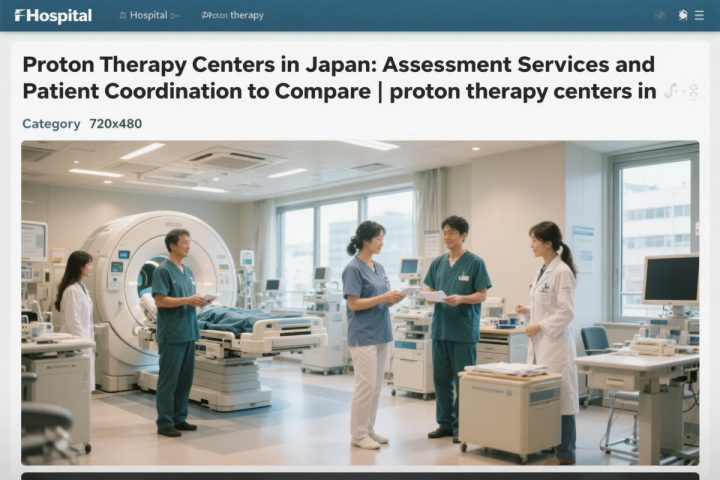
Introduction to Advanced Cancer Care in Japan
For patients and families navigating complex oncology diagnoses, the search for precision treatment often leads to international borders. Proton therapy centers in Japan have emerged as a leading destination for those seeking cutting-edge radiation oncology solutions that minimize damage to surrounding healthy tissue while maximizing tumor control. Unlike traditional photon-based radiation, which passes through the body, proton therapy utilizes charged particles that deposit their maximum energy at a specific depth within the tumor, known as the Bragg peak. This unique physical property makes it particularly valuable for treating cancers located near critical organs such as the brain, spinal cord, eyes, and pediatric tumors.
The landscape of medical tourism in Japan is distinct, characterized by a seamless integration of advanced technology with highly organized patient coordination services. International patients are not merely visitors; they are guests within a structured healthcare ecosystem designed to handle language barriers, cultural differences, and complex logistical needs. When evaluating proton therapy centers in Japan, it is crucial to understand that the value proposition extends beyond the machine itself. It encompasses comprehensive assessment services, multidisciplinary tumor boards, and dedicated patient liaisons who guide individuals from initial inquiry through post-treatment recovery.
This article provides an in-depth analysis of the major facilities offering these treatments, the rigorous assessment protocols required for eligibility, and the intricate coordination processes that define the Japanese healthcare experience. Whether you are considering this option for yourself or a family member, understanding the nuances of facility selection, cost structures, and clinical pathways is essential for making an informed decision. The following sections will detail the operational realities of these centers, comparing their capabilities and patient support systems to help you navigate this critical healthcare journey.
Overview of Proton Therapy Technology and Clinical Benefits
To fully appreciate why so many international patients choose proton therapy centers in Japan, one must first understand the technological advantages over conventional radiation. Traditional X-ray radiation (photon therapy) enters the body, deposits energy along its path, and exits the other side, potentially damaging healthy tissue before and after the tumor site. In contrast, protons are heavier particles that can be precisely controlled to stop exactly at the tumor location. This precision significantly reduces the integral dose to healthy organs, lowering the risk of secondary malignancies and acute side effects.
The clinical benefits are most pronounced in sensitive areas where sparing normal tissue is paramount. For instance, in pediatric oncology, reducing radiation exposure to developing tissues can prevent long-term growth abnormalities and cognitive deficits. Similarly, for head and neck cancers, prostate cancer, and liver tumors, the ability to escalate the radiation dose to the tumor without exceeding tolerance limits of adjacent organs can improve local control rates. These factors make proton therapy centers in Japan particularly attractive for cases where standard radiotherapy poses significant risks or has previously failed.
Japan’s adoption of this technology has been rapid and strategic. The country hosts some of the largest and most technologically advanced proton facilities in the world, including cyclotron and synchrotron-based systems capable of delivering highly conformal dose distributions. The expertise of Japanese radiation oncologists, who have treated thousands of patients with these modalities, adds another layer of quality assurance. Patients benefit from years of accumulated data on beam delivery, motion management, and adaptive planning, ensuring that the treatment plan is optimized for the specific anatomy of each individual.
The Role of Multidisciplinary Tumor Boards
A defining feature of top-tier proton therapy centers in Japan is the reliance on multidisciplinary tumor boards. Before a single proton is delivered, a patient’s case is reviewed by a team comprising radiation oncologists, medical physicists, surgeons, radiologists, and pathologists. This collaborative approach ensures that proton therapy is the optimal choice compared to surgery, chemotherapy, or other forms of radiation. The board evaluates the stage of the disease, the patient’s overall health, and the specific anatomical constraints to determine if the Bragg peak can be effectively utilized for that specific tumor.
This rigorous vetting process prevents unnecessary treatments and ensures that resources are allocated to patients who will derive the most clinical benefit. For international patients, this means that the recommendation to proceed with proton therapy comes from a consensus of experts rather than a single physician’s opinion. The transparency of this process builds trust and provides patients with confidence in the proposed treatment plan. Furthermore, these boards often discuss novel techniques such as intensity-modulated proton therapy (IMPT), which allows for even more precise dose sculpting around irregularly shaped tumors.
Major Facilities Offering Assessment Services
When searching for proton therapy centers in Japan, several institutions stand out due to their scale, technological sophistication, and international patient programs. The National Institute of Radiological Sciences (NIRS) in Chiba, now part of the National Institutes for Quantum Science and Technology (QST), is a pioneer in the field. As the first facility in Asia to open a proton therapy center, it boasts decades of clinical experience and a vast repository of patient data. Its large-scale accelerator allows for high-throughput treatments, making it a hub for both domestic and international research and care.
Another prominent facility is the Hyogo Ion Beam Medical Center in Kobe, operated by the Hyogo Prefectural Government. This center is renowned for its specialized focus on various cancer types and its commitment to advancing proton beam therapy research. The center offers a wide range of treatment options, including spot-scanning techniques that provide exceptional conformity to the tumor volume. Their international patient department is well-versed in handling complex cases and coordinating with overseas physicians to ensure continuity of care.
In addition to these government-affiliated centers, private institutions like the Osaka University Hospital and the Shizuoka Cancer Center also offer state-of-the-art proton therapy. The Shizuoka Cancer Center, for example, was one of the first to implement active scanning techniques widely in clinical practice. Each of these proton therapy centers in Japan operates with slightly different strengths, whether in terms of specific tumor specialization, waiting times, or the breadth of ancillary services provided. Understanding these distinctions is vital for selecting the right center for a specific medical condition.
| Facility Name | Location | Key Specialization | International Patient Support |
|---|---|---|---|
| NIRS/QST (National Institutes for Quantum Science and Technology) | Chiba | Pediatric cancers, Head & Neck, Liver | Dedicated English-speaking coordinators, full translation services |
| Hyogo Ion Beam Medical Center | Kobe | Ophthalmic, Prostate, Lung, Soft Tissue Sarcoma | Comprehensive visa assistance, accommodation coordination |
| Shizuoka Cancer Center | Shizuoka | Active Scanning, IMPT, General Oncology | Multilingual staff, telemedicine consultation options |
| Osaka University Hospital | Osaka | Brain Tumors, Re-treatment Cases | Academic collaboration, research access |
Patient Coordination and Logistics for International Visitors
One of the primary challenges for international patients seeking treatment abroad is the logistics of travel, accommodation, and communication. Proton therapy centers in Japan have developed robust infrastructure to address these issues, recognizing that a stress-free environment is conducive to better medical outcomes. Most major centers employ dedicated international patient departments staffed by bilingual or multilingual coordinators who act as the primary point of contact from the moment an inquiry is made until the patient returns home.
The coordination process typically begins with a remote review of medical records. Patients are asked to submit pathology reports, imaging scans (CT, MRI, PET), and previous treatment summaries via secure portals or email. Once the medical team reviews these documents, they issue a preliminary assessment indicating whether the patient is a candidate for proton therapy. If deemed eligible, the coordinator then assists with obtaining necessary medical visas, arranging airport pickups, and securing accommodations near the hospital. Many centers have partnerships with nearby hotels that offer discounted rates for patients and their families.
During the stay, the coordination extends to daily logistics. Treatment courses for proton therapy often require patients to remain in Japan for several weeks, depending on the fractionation schedule. Coordinators help arrange local transportation, meal plans, and even cultural orientation to help patients feel comfortable in their surroundings. This holistic approach ensures that the patient can focus entirely on their recovery without worrying about the minutiae of daily life in a foreign country. The efficiency of this system is a key differentiator for proton therapy centers in Japan compared to other destinations.
Language Barriers and Communication Protocols
Effective communication is the cornerstone of successful medical treatment. While many Japanese medical professionals speak English, the technical nature of oncology requires precise terminology. Proton therapy centers in Japan mitigate this risk by employing professional medical interpreters who are fluent in both Japanese and English, as well as other major languages. These interpreters are not just translators; they are trained to understand medical contexts and ensure that nuanced discussions about treatment risks, benefits, and consent forms are accurately conveyed.
In addition to human interpreters, many centers utilize digital tools to facilitate communication. Secure messaging platforms allow patients to ask questions between appointments, and translated versions of consent forms and educational materials are readily available. Some centers even offer video conferencing capabilities for pre-treatment consultations with specialists back in the patient’s home country, fostering a collaborative “two-doctor” model where the local team and the home physician work together. This level of communication support is critical for building trust and ensuring that patients fully understand their treatment journey.
The Assessment and Eligibility Process
Before initiating treatment, every patient must undergo a rigorous assessment to determine eligibility. This process is designed to ensure safety and efficacy. For proton therapy centers in Japan, the assessment phase is comprehensive and typically involves a series of steps that may take a few days to complete once the patient arrives. The first step is a detailed physical examination and a review of the patient’s entire medical history. The medical team looks for any comorbidities that might contraindicate radiation therapy or affect the patient’s ability to lie still during treatment sessions.
Imaging is a critical component of the assessment. Patients usually need to undergo a simulation CT scan, which is performed specifically for treatment planning. This scan creates a 3D map of the patient’s anatomy, allowing physicists to design a beam arrangement that targets the tumor while avoiding critical structures. In some cases, additional functional imaging such as PET scans or MRI may be required to better delineate the tumor boundaries. The quality of these images directly impacts the precision of the proton beam delivery.
Following the imaging, the case is presented to the multidisciplinary tumor board. This group reviews all the data and decides if proton therapy is the best course of action. If approved, the physics team begins the treatment planning process, which involves calculating the optimal beam angles and energies. The patient is then involved in the final approval of the plan, where the risks and benefits are explained in detail. This thoroughness ensures that when the treatment begins, it is tailored precisely to the patient’s needs, reflecting the high standards of proton therapy centers in Japan.
- Initial Inquiry: Submission of medical records and insurance information via secure channels.
- Remote Review: Preliminary evaluation by senior oncologists to assess candidacy.
- Visa and Travel Arrangements: Assistance with medical visas and booking flights/accommodation.
- On-site Consultation: Physical examination, blood tests, and psychological screening.
- Treatment Simulation: High-resolution CT/MRI/PET scans for planning.
- Tumor Board Review: Multidisciplinary team decision on treatment feasibility.
- Plan Approval: Final discussion and consent signing with the patient and family.
Cost Structures and Insurance Considerations
Cost is a significant factor for international patients considering proton therapy centers in Japan. While the technology is expensive, the total cost often includes the entire package of care, from assessment to follow-up. The price of a full course of proton therapy in Japan can vary depending on the facility, the complexity of the tumor, and the length of the hospital stay. Generally, the cost ranges significantly higher than conventional radiation but can be competitive with similar treatments in the United States or Europe, especially when factoring in travel expenses.
Most proton therapy centers in Japan operate on a self-pay basis for international patients, as national health insurance schemes typically do not cover non-residents. However, some private international health insurance policies may offer partial coverage or reimbursement. Patients are strongly advised to consult with their insurance providers before traveling to understand what is covered. The hospitals provide detailed itemized estimates upfront, which include consultation fees, imaging, planning, treatment sessions, and accommodation costs if staying within the hospital premises.
It is important to note that the pricing structure in Japan is transparent. There are rarely hidden fees, and the quoted price usually covers the entire treatment cycle. Some centers offer financing options or payment plans to ease the financial burden. Additionally, because the treatment duration is often shorter than in some other countries due to efficient scheduling, the overall cost of living and extended stay expenses can be lower. This balance of high-quality care and manageable costs makes proton therapy centers in Japan a viable option for many families.
Comparison of Treatment Modalities and Outcomes
When evaluating proton therapy centers in Japan, it is helpful to compare the outcomes of proton therapy against other modalities. While randomized controlled trials comparing proton therapy to photon therapy are ongoing for many cancer types, existing data suggests superior toxicity profiles for protons in specific scenarios. For example, studies have shown reduced rates of xerostomia (dry mouth) in head and neck cancer patients and fewer gastrointestinal complications in abdominal tumors treated with protons.
The comparison also extends to the speed of treatment. Proton therapy sessions are generally quick, often lasting only a few minutes for the actual beam delivery, though the setup time may add to the visit duration. The total number of sessions required depends on the protocol, but the precision of protons can sometimes allow for hypofractionated schedules, meaning fewer visits overall. This convenience is highly valued by international patients who wish to minimize their time away from home.
- Efficacy: Comparable tumor control rates to photon therapy in most indications, with potential superiority in re-irradiation cases.
- Toxicity: Significantly lower dose to surrounding healthy tissues, reducing acute and late side effects.
- Accessibility: High availability of slots in Japan compared to some Western countries with longer wait times.
- Technology: Access to latest generation scanners with real-time motion management capabilities.
- Support: Integrated patient coordination and cultural sensitivity training for staff.
Frequently Asked Questions
How long does the entire treatment process take for international patients?
The timeline varies based on the specific cancer type and treatment plan, but generally, the process spans 4 to 6 weeks. This includes 1 to 2 weeks for initial assessment, imaging, and treatment planning, followed by 2 to 4 weeks of daily treatment sessions. Some patients may require a longer stay for observation or if the treatment plan is complex. The dedicated coordinators at proton therapy centers in Japan will provide a personalized schedule upon arrival to manage expectations effectively.
Is proton therapy covered by insurance for international patients?
Standard Japanese national health insurance does not cover international patients. However, some private international health insurance plans may cover a portion of the costs. It is essential to verify coverage with your provider before traveling. Many hospitals in Japan offer direct billing arrangements or can provide detailed invoices for reimbursement purposes. Self-pay is the most common method, with costs ranging based on the facility and treatment complexity.
What are the eligibility criteria for proton therapy?
Eligibility depends on the tumor type, stage, location, and the patient’s overall health. Proton therapy is often recommended for tumors near critical organs, pediatric cases, and situations requiring re-irradiation. A multidisciplinary tumor board at the proton therapy centers in Japan will review all medical records to determine if the patient meets the clinical criteria. Not all cancers require or benefit from proton therapy, and conventional radiation may be preferred in certain cases.
Can I bring a family member or caregiver with me?
Yes, most proton therapy centers in Japan encourage patients to bring a companion. Having a family member or caregiver present can provide emotional support and assist with daily logistics. Hospitals often have guest rooms or can recommend nearby accommodations suitable for companions. The international patient coordinators can also assist in arranging meals and activities for the accompanying person to ensure a comfortable stay.
What happens if I need follow-up care after returning home?
The Japanese medical teams are committed to long-term patient care. They typically provide a comprehensive discharge summary and treatment report in English, detailing the radiation doses, fields, and any recommendations for follow-up. Many centers offer remote follow-up consultations via video conferencing to monitor progress. Patients are encouraged to share these reports with their local oncologists to ensure continuity of care in their home country.