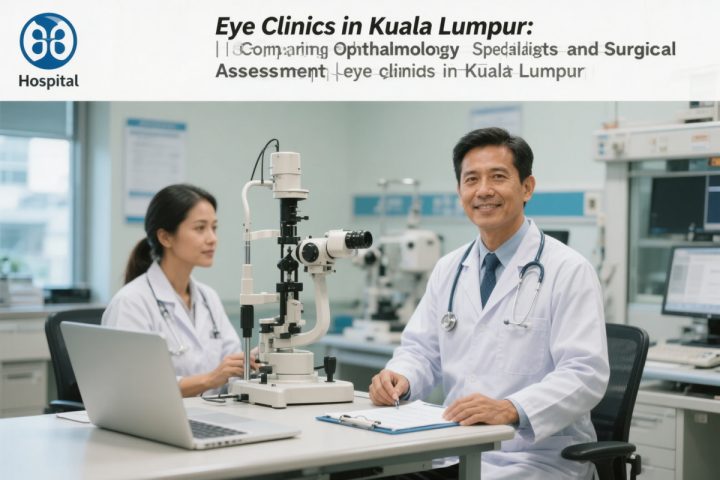
When vision is compromised, the urgency to find a solution is immediate and often accompanied by significant anxiety. For residents and visitors in Malaysia’s capital, the decision-making process regarding eye care is critical. The landscape of eye clinics in Kuala Lumpur offers a vast array of options, ranging from specialized ophthalmology centers within major hospital complexes to standalone surgical suites. Navigating this market requires more than just finding the nearest location; it demands a deep understanding of the differences between general optometry services and specialized ophthalmological care, as well as the rigorous standards required for surgical assessments.
The primary distinction lies in the scope of practice and the depth of medical intervention. While many facilities offer basic vision testing and prescription updates, true ophthalmology specialists are medical doctors trained to diagnose, treat, and manage complex eye diseases and perform surgeries. In a city like Kuala Lumpur, where healthcare tourism is thriving and local demand is high, the variation in service quality, technological capability, and specialist expertise can be substantial. Patients seeking solutions for conditions such as cataracts, glaucoma, or retinal disorders must carefully evaluate these clinics to ensure they receive care that meets international safety standards.
This comprehensive guide aims to demystify the selection process for eye clinics in Kuala Lumpur. We will explore the nuances of comparing different types of ophthalmologists, understand the critical components of a pre-surgical assessment, and analyze the factors that influence treatment outcomes. Whether you are dealing with age-related vision changes, acute trauma, or chronic conditions, understanding the hierarchy of care within the city’s medical ecosystem is essential. By focusing on the qualifications of the specialists, the technology available, and the transparency of the surgical assessment process, patients can make informed decisions that prioritize their long-term ocular health.
Understanding the Hierarchy of Eye Care Specialists
One of the most common points of confusion for patients visiting eye clinics in Kuala Lumpur is the difference between an optometrist and an ophthalmologist. While both professionals work in eye care, their training, capabilities, and roles within the patient journey are fundamentally different. Optometrists are primarily focused on vision correction, prescribing glasses and contact lenses, and detecting certain eye diseases. However, when a condition requires medical management or surgical intervention, the patient must be referred to an ophthalmologist.
An ophthalmologist is a medical doctor (MD) who has completed extensive residency training specifically in eye care. This training includes four years of medical school followed by at least three to five years of specialized residency in ophthalmology. In some cases, they may pursue further fellowship training in subspecialties such as retina, cornea, glaucoma, or pediatric ophthalmology. When searching for top-tier eye clinics in Kuala Lumpur, it is crucial to verify that the practitioners providing surgical assessments hold full medical registration with the Malaysian Medical Council and are members of recognized bodies like the Malaysian Ophthalmological Society.
The complexity of eye conditions varies widely, necessitating a tiered approach to specialist selection. For routine refractive errors, a general ophthalmologist may suffice. However, for complex pathologies involving the retina, optic nerve, or anterior segment, patients should seek out subspecialists. Many leading hospitals in Kuala Lumpur house these experts under one roof, allowing for multidisciplinary collaboration. This integration ensures that if a patient presents with a systemic disease like diabetes that affects the eyes, the ophthalmologist can coordinate seamlessly with endocrinologists and other specialists within the same institution.
The reputation of a specialist is often built on their surgical volume and outcomes. In the competitive market of eye clinics in Kuala Lumpur, experienced surgeons who perform thousands of procedures annually often have refined techniques that reduce recovery times and improve visual outcomes. Patients should inquire about the surgeon’s specific experience with their particular condition. For instance, a surgeon specializing in corneal transplants may not be the best choice for a patient needing cataract surgery, even if they are highly skilled in their respective fields. Understanding this specialization is the first step in ensuring a successful treatment plan.
Subspecialty Focus and Advanced Diagnostics
The evolution of eye care has led to the emergence of highly specialized subspecialties within the broader field of ophthalmology. In the context of eye clinics in Kuala Lumpur, patients can now access world-class care in areas such as neuro-ophthalmology, uveitis, and oculoplastics. These subspecialists possess deep knowledge of rare and complex conditions that general practitioners might not encounter frequently. A clinic that advertises comprehensive care often houses multiple subspecialists, offering a “one-stop” solution for complex cases.
Diagnostics play a pivotal role in determining which specialist is appropriate for a patient’s needs. Modern ophthalmology specialists utilize advanced imaging technologies such as Optical Coherence Tomography (OCT), fundus photography, and visual field testing. These tools provide detailed cross-sectional images of the retina and optic nerve, allowing for early detection of diseases like macular degeneration and glaucoma before symptoms become apparent. Clinics equipped with state-of-the-art diagnostic equipment can offer more precise assessments, leading to earlier interventions and better prognosis.
When evaluating potential clinics, patients should consider whether the facility invests in continuous education for its staff. The field of ophthalmology is rapidly advancing, with new lasers, pharmaceuticals, and surgical techniques emerging regularly. Top-tier eye clinics in Kuala Lumpur often maintain partnerships with international institutions and participate in global clinical trials. This commitment to staying at the forefront of medical innovation ensures that patients have access to the latest treatments rather than outdated protocols. It also indicates a culture of excellence and patient safety.
Furthermore, the availability of ancillary services is a key differentiator among clinics. Comprehensive eye care often requires coordination with optical labs, low-vision rehabilitation services, and genetic counseling. Clinics that offer these integrated services demonstrate a holistic approach to patient management. For example, a patient diagnosed with a hereditary retinal dystrophy may benefit from genetic testing and counseling alongside their regular monitoring visits. The presence of such support systems within a clinic can significantly enhance the patient experience and adherence to treatment plans.
The Critical Role of Pre-Surgical Assessment
A thorough pre-surgical assessment is the cornerstone of any successful ophthalmic procedure. In the bustling healthcare environment of eye clinics in Kuala Lumpur, the standard for surgical preparation is exceptionally high due to the concentration of both local and international patients. This assessment is not merely a formality; it is a comprehensive evaluation designed to identify potential risks, optimize the patient’s health status, and tailor the surgical plan to individual anatomical needs. Skipping or rushing through this phase can lead to suboptimal outcomes or complications.
The assessment begins with a detailed medical history review. The ophthalmologist will inquire about systemic conditions such as hypertension, diabetes, heart disease, and autoimmune disorders, all of which can impact eye surgery. Medication lists are scrutinized to identify drugs that may interact with anesthesia or affect bleeding risks. For patients taking anticoagulants, the specialist may coordinate with their primary care physician to adjust dosages safely prior to the procedure. This level of diligence is a hallmark of reputable ophthalmology specialists who prioritize patient safety above all else.
Beyond the medical history, a series of biometric measurements are taken to determine the precise specifications for intraocular lenses (IOLs) in cataract surgery or to plan laser refractive procedures. Technologies such as biometers and corneal topographers map the curvature and dimensions of the eye with micrometer precision. In eye clinics in Kuala Lumpur, these machines are often integrated with artificial intelligence algorithms that help predict post-operative visual outcomes. The accuracy of these measurements directly influences the final visual acuity achieved by the patient, making the assessment phase arguably the most technical part of the entire surgical journey.
Patient education is another vital component of the pre-surgical assessment. The specialist must ensure that the patient has realistic expectations regarding the results of the surgery. This involves discussing the limitations of current technology, the potential need for glasses post-operatively, and the recovery timeline. Informed consent is a legal and ethical requirement, but it is also a therapeutic tool that builds trust. A good ophthalmology specialist will take the time to answer every question, explaining the procedure step-by-step and addressing any fears the patient may harbor. This open communication helps reduce anxiety and improves compliance during the recovery period.
Risk stratification is the final, yet perhaps most important, aspect of the assessment. The ophthalmologist evaluates the likelihood of complications based on the patient’s unique physiology and health profile. For instance, patients with thin corneas may not be candidates for certain laser surgeries, while those with active infections require treatment before any elective procedure can proceed. By identifying these risk factors early, the clinic can either modify the surgical plan or recommend alternative treatments. This proactive approach minimizes the chance of adverse events and ensures that only suitable candidates undergo surgery, maintaining the high standards expected of eye clinics in Kuala Lumpur.
Technological Integration in Surgical Planning
The integration of advanced technology into the surgical assessment process distinguishes leading eye clinics in Kuala Lumpur from smaller practices. 3D modeling of the eye, virtual reality simulations for patient visualization, and femtosecond laser planning systems are becoming standard in top-tier facilities. These technologies allow surgeons to visualize the surgical field in unprecedented detail before making a single incision. For complex cases involving traumatic injuries or congenital anomalies, this digital planning can be life-changing.
Artificial Intelligence (AI) is increasingly being utilized to assist in the interpretation of diagnostic data. AI algorithms can detect subtle patterns in retinal scans that the human eye might miss, aiding in the early diagnosis of diabetic retinopathy or age-related macular degeneration. In the context of surgical assessment, AI can help predict the optimal lens power for IOL implantation by analyzing vast datasets of similar patient profiles. This data-driven approach enhances the precision of the surgery and contributes to higher patient satisfaction rates.
Telemedicine has also transformed the pre-surgical workflow. Many eye clinics in Kuala Lumpur now offer remote consultations for initial screenings, allowing patients to discuss their concerns and review preliminary test results without traveling to the clinic. This is particularly beneficial for patients living in rural areas or those with mobility issues. Once the initial screening is complete, the patient can be scheduled for an in-person assessment if necessary. This hybrid model improves accessibility and efficiency, ensuring that resources are allocated to those who truly need hands-on evaluation.
Comparing Costs, Insurance, and Value Propositions
Cost is a significant factor when choosing eye clinics in Kuala Lumpur, but it should never be the sole determinant of quality. The price of eye care services can vary widely depending on the type of procedure, the technology used, the seniority of the surgeon, and the amenities provided. Understanding the cost structure is essential for patients to avoid unexpected financial burdens and to make value-based decisions. In Malaysia, the healthcare system offers a mix of public and private sectors, each with distinct pricing models and insurance implications.
Private hospitals and specialized eye centers in Kuala Lumpur typically operate on a fee-for-service basis, though many offer package deals for common procedures like cataract surgery or LASIK. These packages often include the surgeon’s fee, operating theater costs, anesthesia, and post-operative follow-up visits. However, patients must carefully read the fine print to understand what is included. Some lower-cost packages may exclude premium intraocular lenses or advanced diagnostic tests, which can add up quickly. Transparent pricing is a sign of a trustworthy ophthalmology specialist and clinic.
Insurance coverage plays a pivotal role in the affordability of eye care. Most comprehensive health insurance plans in Malaysia cover medically necessary procedures such as cataract removal, glaucoma surgery, and treatment for retinal detachments. Elective procedures like refractive surgery (LASIK/PRK) are often excluded or covered only under specific riders. Patients should consult their insurance providers to understand their coverage limits and pre-authorization requirements. Reputable eye clinics in Kuala Lumpur usually have dedicated billing departments that can assist with insurance claims and provide cost estimates upfront, reducing administrative stress for the patient.
The concept of “value” extends beyond the sticker price. A slightly higher cost for a procedure performed by a renowned specialist using the latest laser technology may result in faster recovery, fewer complications, and superior visual outcomes compared to a cheaper option. When evaluating eye clinics in Kuala Lumpur, patients should consider the total cost of ownership, including potential revision surgeries, additional medications, and lost productivity due to extended recovery times. Investing in quality care often proves more economical in the long run.
Medical tourism is a growing sector in Kuala Lumpur, attracting patients from neighboring countries who seek high-quality eye care at competitive prices. International patients benefit from the city’s English-speaking medical professionals and world-class infrastructure. However, they must also consider travel costs, accommodation, and the logistics of post-operative follow-up care once they return home. Clinics catering to medical tourists often provide concierge services to assist with visas, transportation, and hotel bookings, adding a layer of convenience to the overall experience.
Key Factors in Selecting the Right Clinic and Surgeon
Selecting the right eye clinic in Kuala Lumpur requires a strategic approach that balances medical expertise, patient reviews, and logistical convenience. The decision should be driven by the specific needs of the patient and the nature of their condition. To facilitate this decision-making process, we have outlined several key factors that patients should consider when comparing different facilities.
- Credentials and Certification: Verify that the ophthalmologist is registered with the Malaysian Medical Council and holds relevant fellowships from recognized boards. Check for membership in professional organizations like the Malaysian Ophthalmological Society.
- Surgical Volume and Experience: Inquire about the number of procedures the surgeon performs annually, specifically for the condition you are treating. High-volume surgeons generally have better outcomes and fewer complications.
- Technology and Equipment: Assess the clinic’s investment in modern diagnostic and surgical technology. State-of-the-art equipment often correlates with higher precision and better patient comfort.
- Patient Reviews and Testimonials: Read independent reviews on platforms like Google, Healthgrades, or local forums. Look for consistent feedback regarding bedside manner, wait times, and post-operative care.
- Facility Accreditation: Ensure the hospital or clinic is accredited by the Malaysian Society for Quality in Health (MSQH) or international bodies like JCI, which indicate adherence to strict safety and quality standards.
In addition to these quantitative factors, the qualitative aspects of the patient experience are equally important. The demeanor of the nursing staff, the cleanliness of the facility, and the clarity of communication from the administrative team can significantly impact a patient’s confidence in the clinic. A supportive environment fosters trust and reduces anxiety, which is crucial for a positive surgical outcome. Patients should feel comfortable asking questions and expressing their concerns without fear of dismissal.
Another critical consideration is the continuity of care. After the surgery, the patient will need regular follow-up appointments to monitor healing and visual recovery. Choosing a clinic that is conveniently located or offers telemedicine follow-ups can make a significant difference in adherence to the post-operative regimen. For patients traveling from outside Kuala Lumpur, selecting a clinic with strong relationships with local eye doctors in their home region can ensure seamless ongoing care.
Finally, patients should trust their instincts. If a clinic pressures them into a procedure without a thorough explanation or downplays the risks, it is a red flag. Ethical ophthalmology specialists prioritize the patient’s well-being over profit margins. They will present all viable options, including non-surgical alternatives, and respect the patient’s right to decline treatment. This patient-centered approach is the hallmark of a truly excellent eye care provider in Kuala Lumpur.
Comparison of Treatment Options and Specializations
To provide a clearer picture of the services available, it is helpful to compare the typical offerings across different types of eye clinics in Kuala Lumpur. The table below outlines the variations in focus, technology, and target patient demographics found in the city’s eye care sector.
| Clinic Type | Primary Focus | Typical Procedures | Target Demographic | Technology Level |
|---|---|---|---|---|
| Public Hospital Eye Department | High-volume, medically complex cases, subsidized care | Cataract surgery, Glaucoma management, Retinal detachment repair | General population, low-income patients, emergency cases | Standard to Advanced (varies by department) |
| Private Specialist Eye Center | Comprehensive surgical care, premium patient experience | Refractive surgery, Premium IOL implantation, Corneal transplants | Private payers, medical tourists, corporate clients | State-of-the-art (Femtosecond lasers, OCT, etc.) |
| Hospital-Based Ophthalmology Wing | Multidisciplinary care, complex systemic eye diseases | Diabetic retinopathy treatment, Neuro-ophthalmology, Uveitis management | Patients with comorbidities (diabetes, hypertension) | Advanced (Integrated with ICU and specialized labs) |
| Refractive Surgery Boutique | Vision correction, cosmetic eye enhancement | LASIK, PRK, SMILE, Phakic IOLs | Young adults, contact lens wearers, professionals | High-tech (Wavefront-guided lasers, Custom mapping) |
This comparison highlights that no single clinic type is “best” for everyone. The choice depends entirely on the patient’s specific medical needs, financial situation, and personal preferences. For a routine cataract surgery, a private specialist center might offer the most comfortable environment and shortest wait times. Conversely, a complex case involving severe trauma or a rare genetic disorder might require the multidisciplinary resources of a large public hospital or a university-affiliated teaching hospital.
- Wait Times: Private clinics generally offer shorter wait times for consultations and elective surgeries compared to public hospitals, where queues can be lengthy.
- Privacy and Comfort: Private facilities often provide private rooms and more personalized attention, which can be a significant factor for patients concerned about privacy.
- Cost Variability: Public hospitals offer heavily subsidized rates, making them accessible to a wider population, whereas private clinics charge market rates that reflect the premium service and technology provided.
- Specialist Availability: Private centers often employ multiple subspecialists, allowing for quicker internal referrals if a patient’s condition evolves beyond the scope of the primary surgeon.
Frequently Asked Questions
How do I choose between a public and private eye clinic in Kuala Lumpur?
The choice depends on your budget, urgency, and desired level of privacy. Public hospitals offer highly subsidized care and handle complex, rare cases, but may have longer waiting times for elective procedures. Private eye clinics in Kuala Lumpur provide faster access, premium amenities, and often more advanced technology for elective surgeries like LASIK or premium cataract implants, but at a higher out-of-pocket cost.
What qualifications should I look for in an ophthalmology specialist?
You should verify that the specialist is a registered medical doctor with the Malaysian Medical Council. Look for additional credentials such as a Fellowship in Ophthalmology (FAMS) or membership in the Malaysian Ophthalmological Society. Subspecialty certifications are also important if you have a specific condition like glaucoma or retinal disease.
Is pre-surgical assessment covered by insurance?
Most comprehensive health insurance plans in Malaysia cover pre-surgical assessments for medically necessary procedures, such as cataract or glaucoma surgery. However, elective procedures like refractive surgery (LASIK) often have limited coverage or require specific riders. Always check with your insurance provider and the clinic’s billing department beforehand.
How long does the recovery process typically take after eye surgery?
Recovery times vary by procedure. For cataract surgery, most patients see improvement within 24 to 48 hours, with full stabilization occurring over a few weeks. Refractive surgeries like LASIK often have a very quick recovery, with vision improving within 24 hours. Your ophthalmology specialist will provide a specific timeline based on your individual case and the technique used.
Can I get a second opinion from another eye clinic in Kuala Lumpur?
Yes, seeking a second opinion is a common and recommended practice, especially for major surgeries. Reputable eye clinics in Kuala Lumpur encourage this and can often share medical records and diagnostic images with other specialists to facilitate the process. It ensures you are fully informed and confident in your treatment plan.